Parks and gardens
Giardino dei Marinaretti
A small public garden near the sea, ideal for a quiet walk and for the little ones to play outdoors.
400 m 6′ on foot
Location on Google Maps
Seventy-two places around Ortigia and Neapolis, with indicative distances from our address and links to maps.
Three things to know about the distances and the photos below.
These are indicative estimates from 37 Viale Luigi Cadorna; actual routes and travel times may vary. Open the map to plan your journey.
Every card leads to the position of the place and opens the map on the exact spot: from there you also find parking, opening hours and how to get there.
Each image credits its author and licence and links back to the source: they are open files, not ours, and anyone can check where they come from.
Choose a route through the city. Each collection includes distances and directions to the places.
A selection of places in Syracuse. Each card shows an indicative distance where available and a link to the map.
Parks and gardens
A small public garden near the sea, ideal for a quiet walk and for the little ones to play outdoors.
400 m 6′ on foot
Location on Google Maps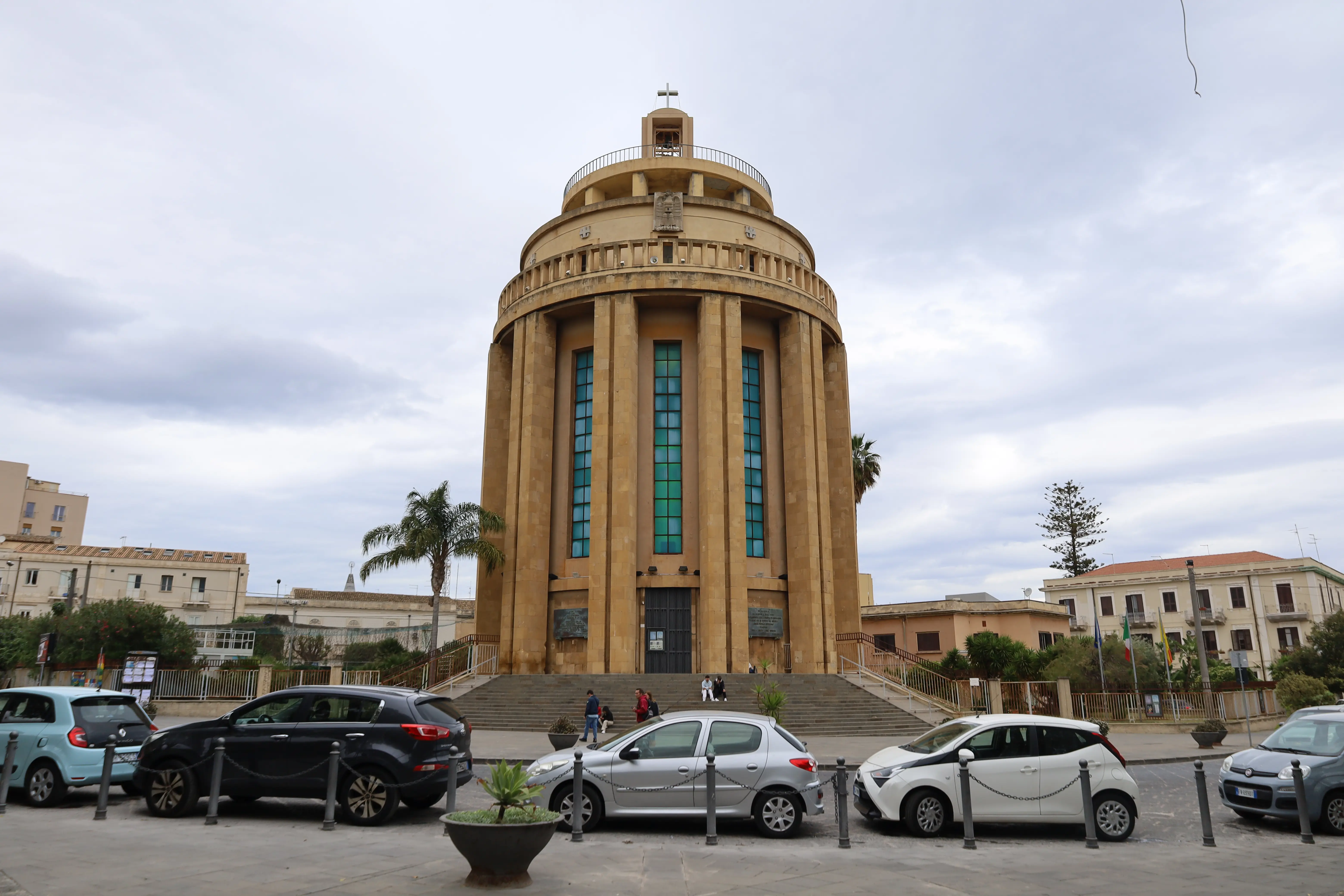
Churches
A former church with a central plan, now a cultural venue, it still preserves its frescoes.
Parks and gardens
A children’s playground in a residential area, handy for neighbourhood families looking for a green space close to home.
550 m 8′ on foot
Location on Google Maps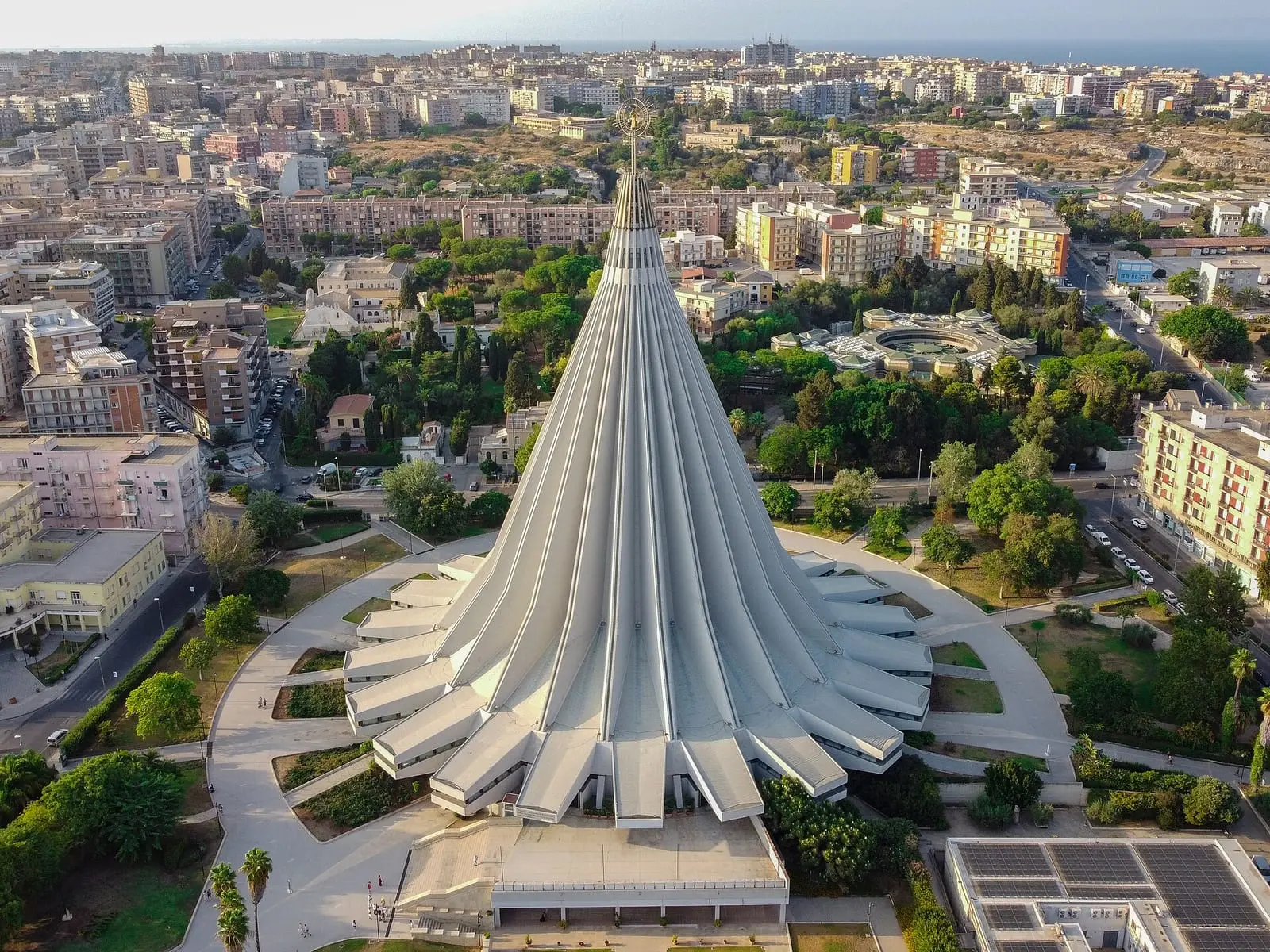
Churches
A modern building raised in memory of the miracle of the Virgin’s tears.
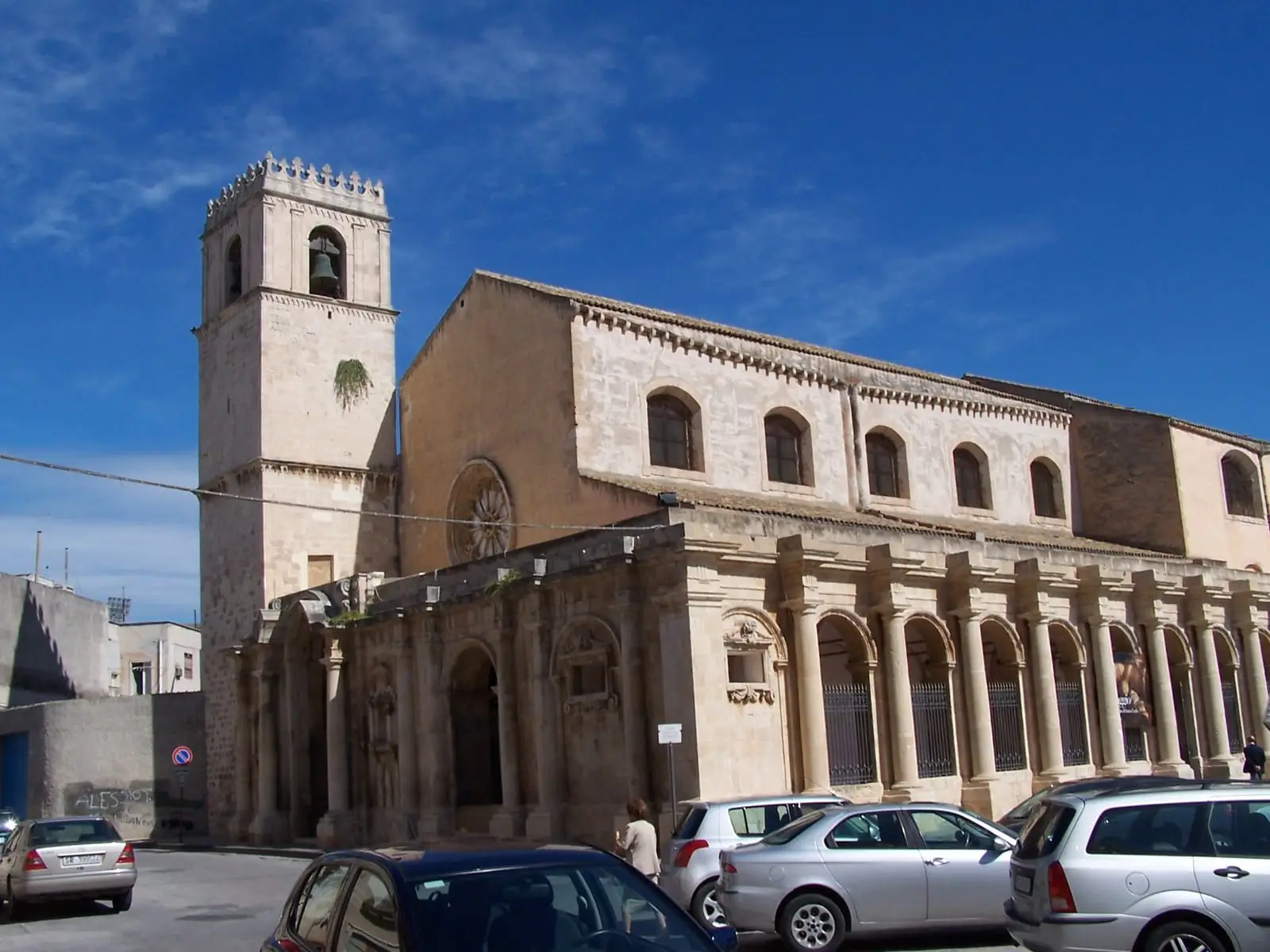
Churches
Built on the site of the saint’s martyrdom, with an octagonal dome and a central plan.
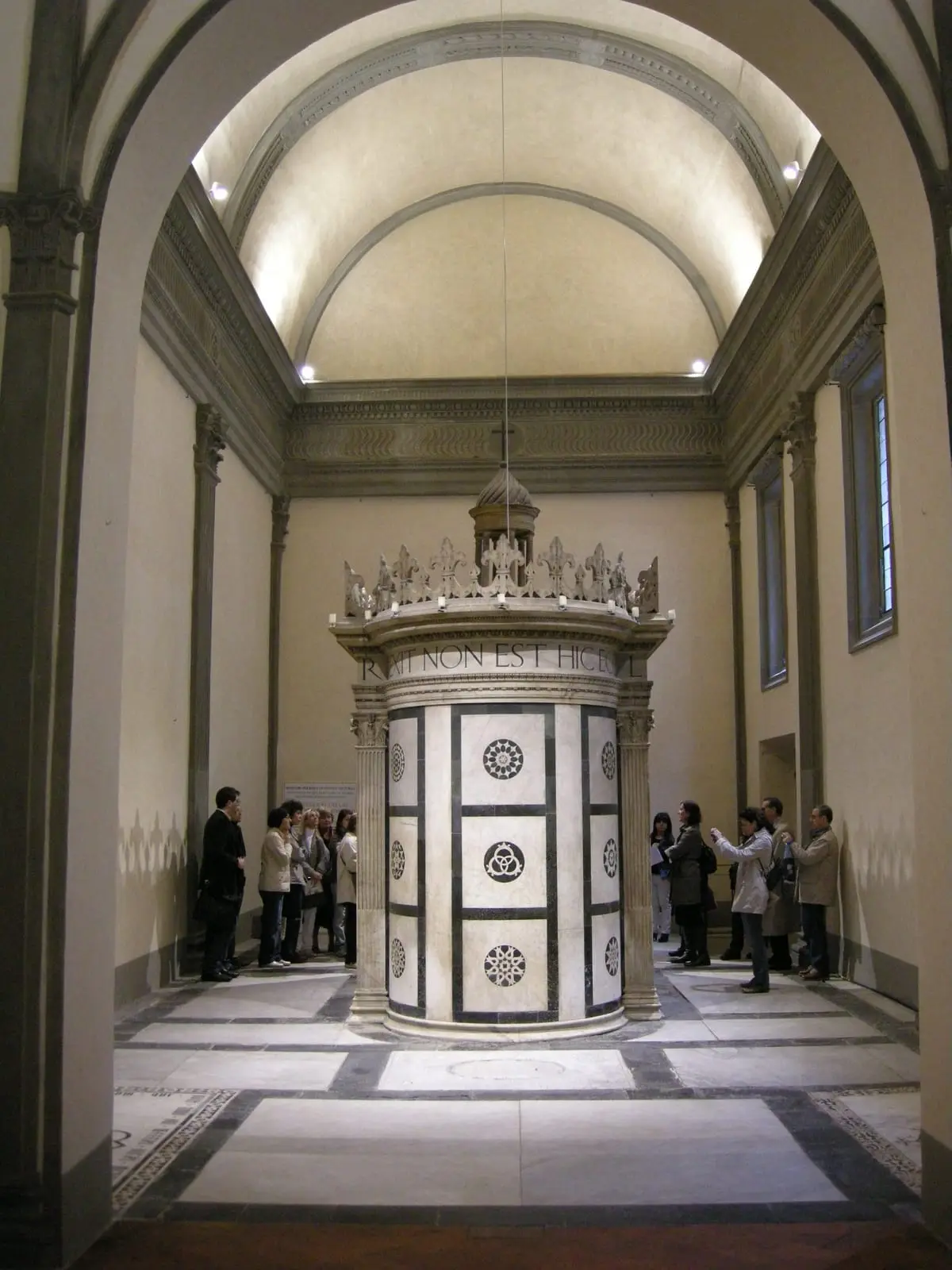
Archaeological sites
A 4th-century AD small domed temple dedicated to the cult of the dead, reflecting late Roman influences.
Parks and gardens
A small green area with children’s games, the meeting point of the neighbourhood and a good place for an afternoon stop.
650 m 9′ on foot
Location on Google Maps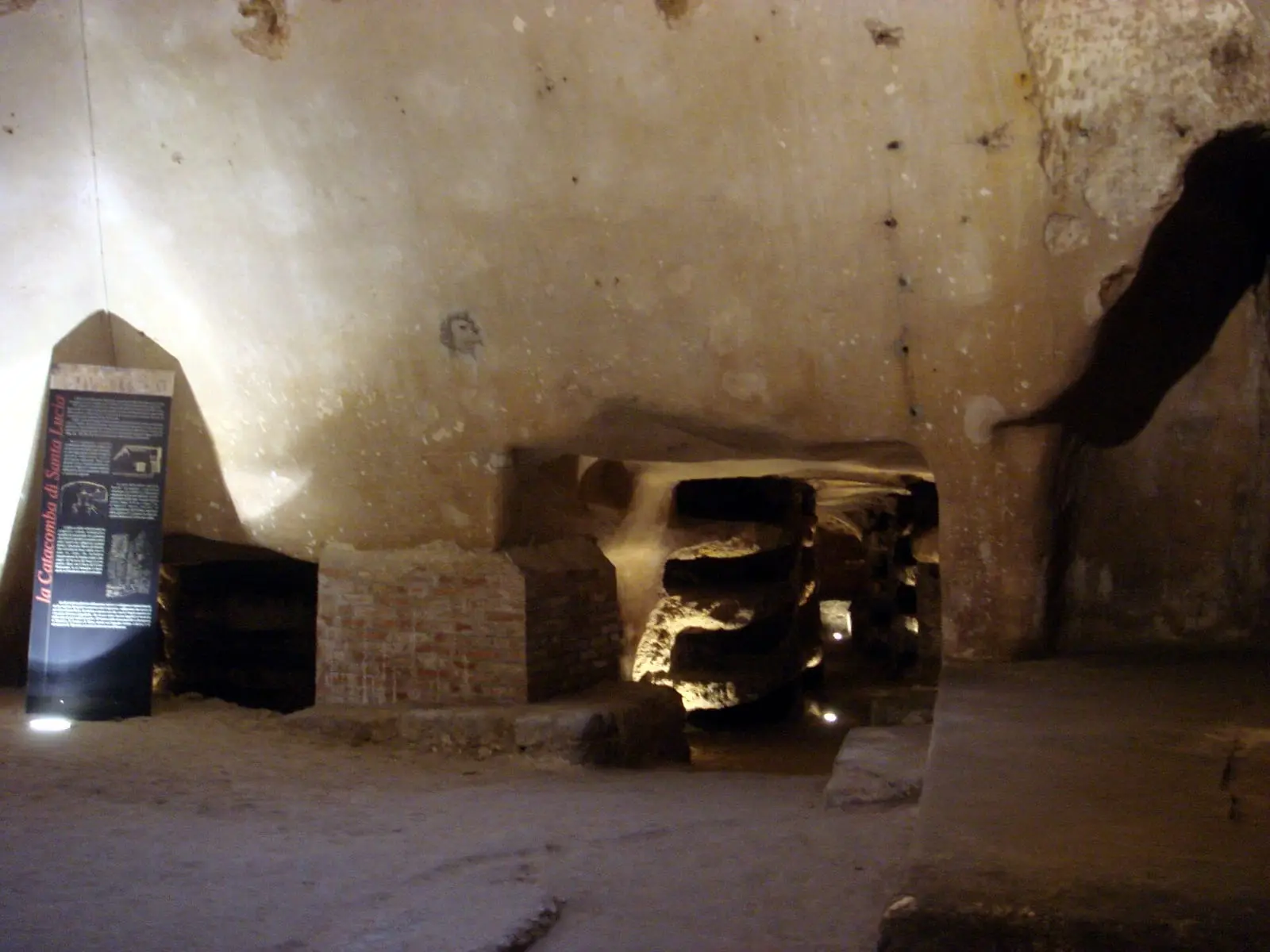
Archaeological sites
Early Christian and less known than those of San Giovanni, with loculi and vaulted rooms: a community shelter and a place of worship.
Museums
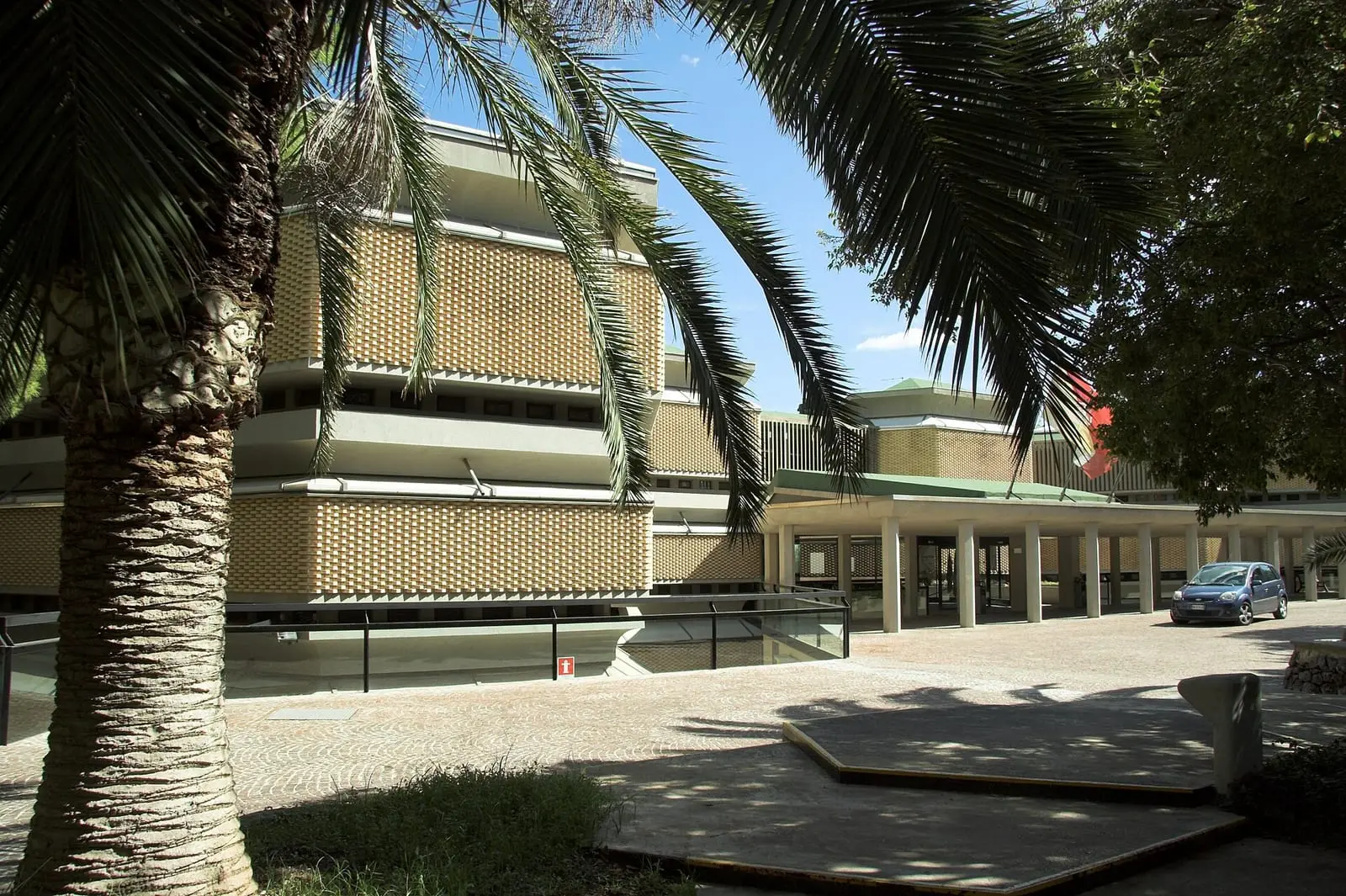
One of Europe’s leading museums of classical archaeology: it holds finds from prehistory to late antiquity, with statues, vases and mosaics.
Historic palaces
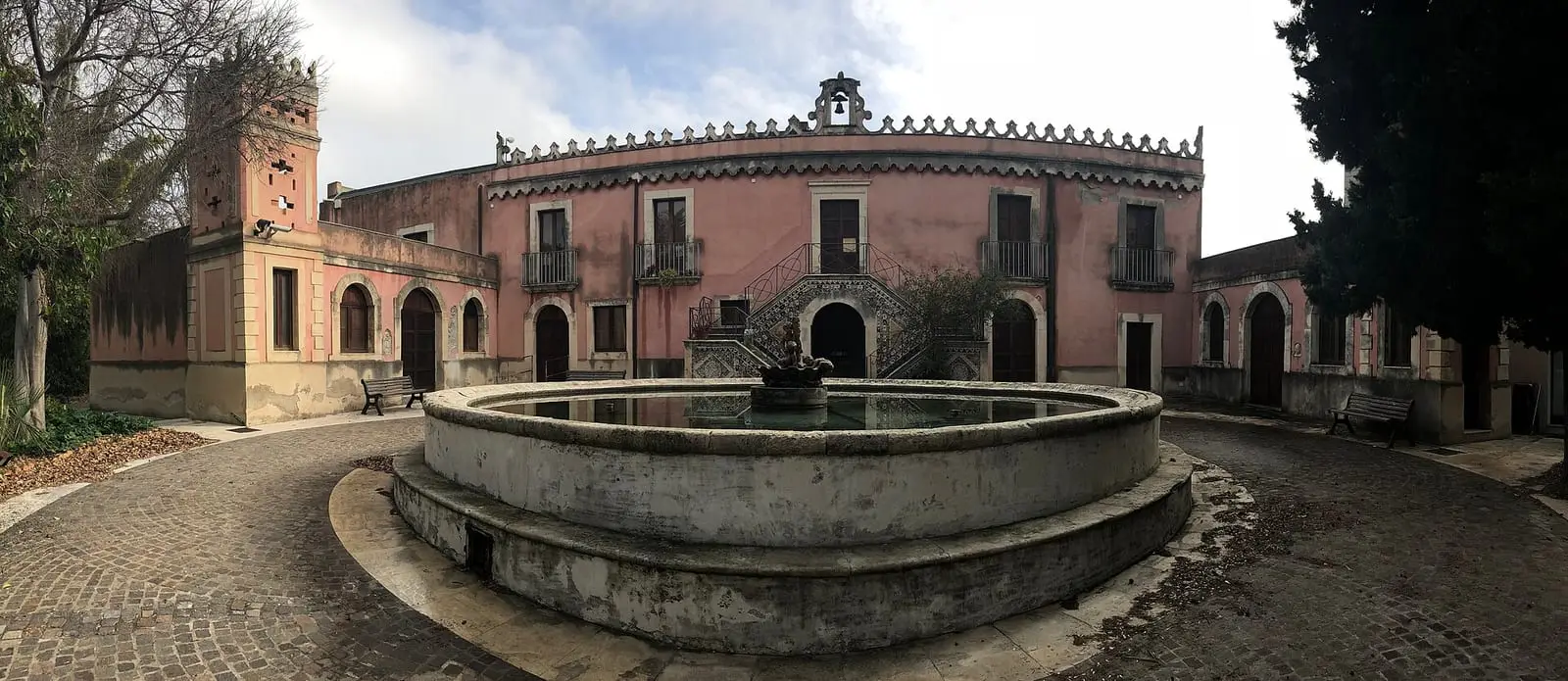
An elegant nineteenth-century residence, with Italian-style gardens and frescoed halls that host summer cultural events.
Parking
A handy car park next to the harbour and a few minutes’ walk from Ortigia. Ideal for leaving the car and reaching the old town stress-free.
800 m 11′ on foot
Location on Google Maps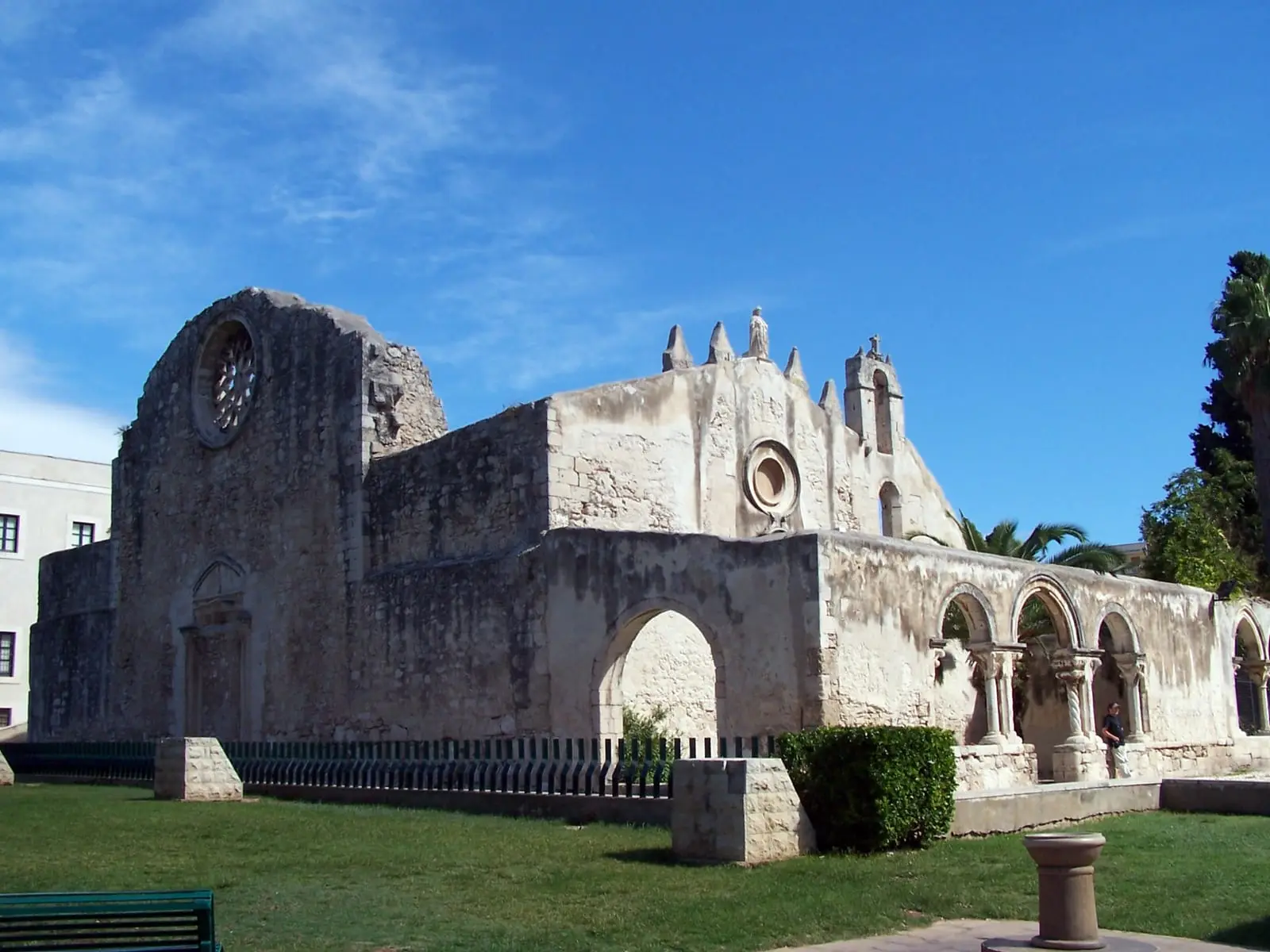
Churches
An early Christian church with a Byzantine crypt and catacombs, a symbol of the ancient faith.
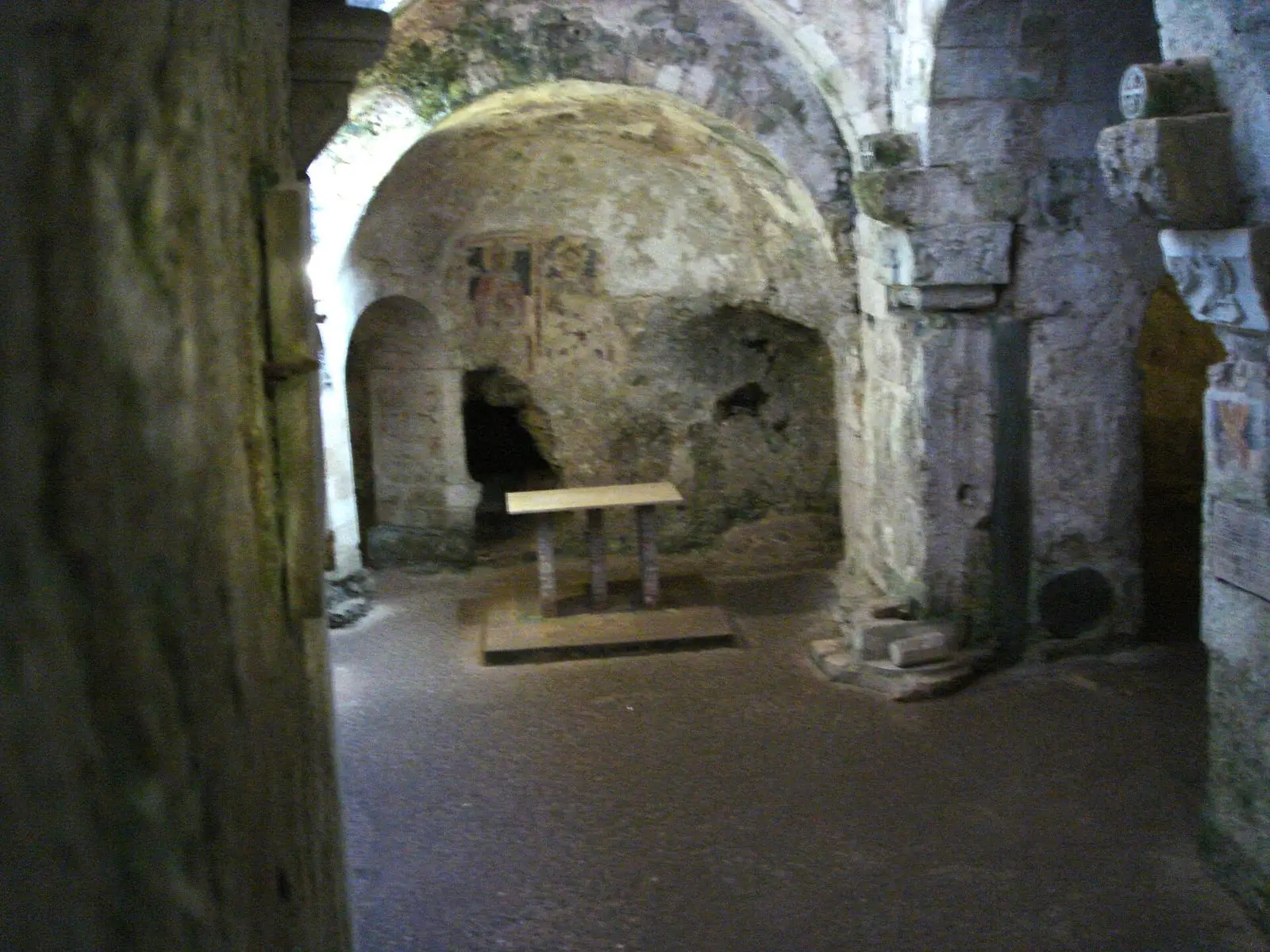
Archaeological sites
An early Christian complex (1st-5th centuries) with cubicula, loculi and meeting rooms, the trace of a thriving Christian community.
Parks and gardens
A playground in the San Giovanni area, perfect for letting the children run about after a walk around the neighbourhood.
900 m 13′ on foot
Location on Google Maps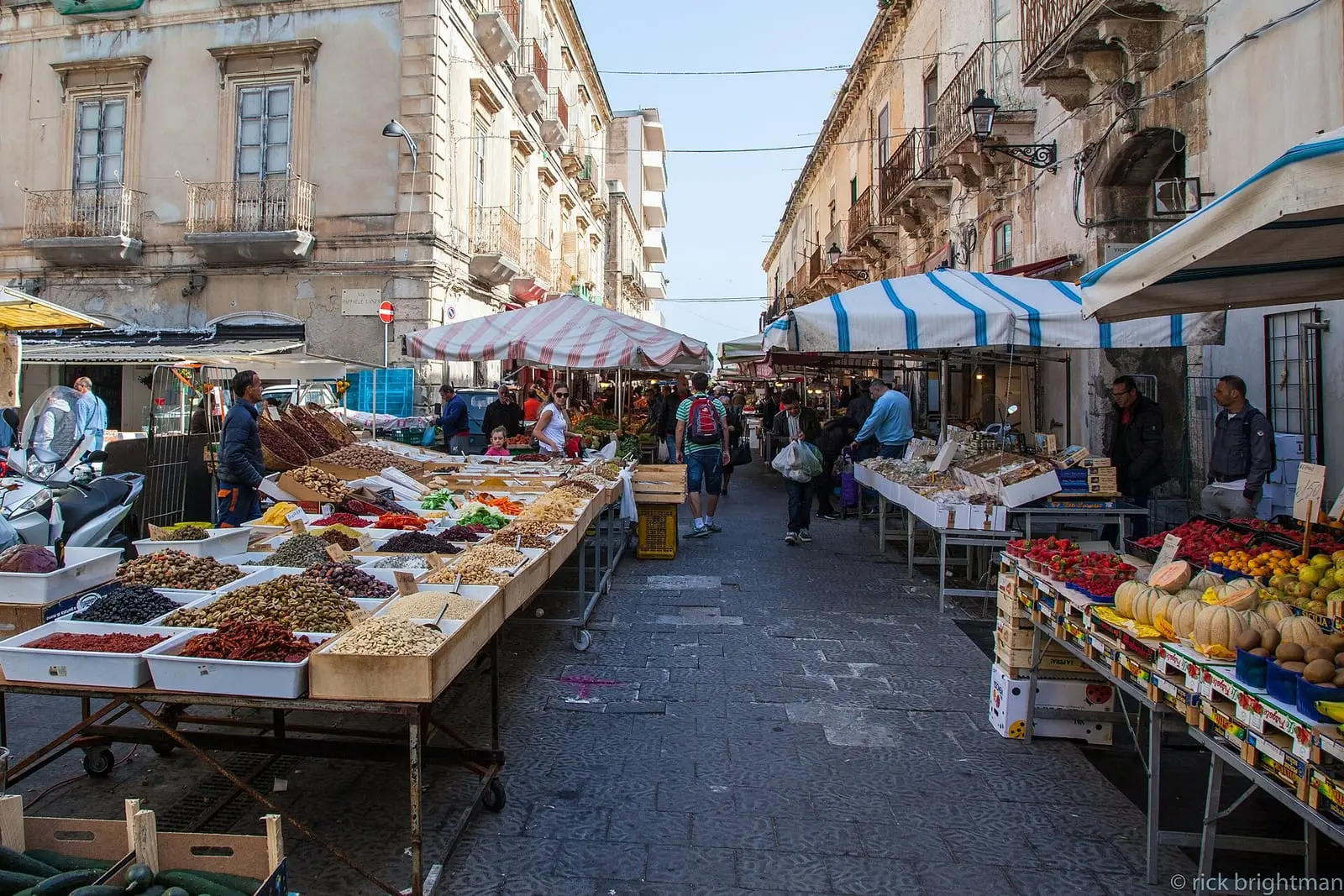
Other places
Colourful and lively, it is the beating heart of the old town: stalls of fresh fish, spices, local produce and the voices of everyday Syracuse.
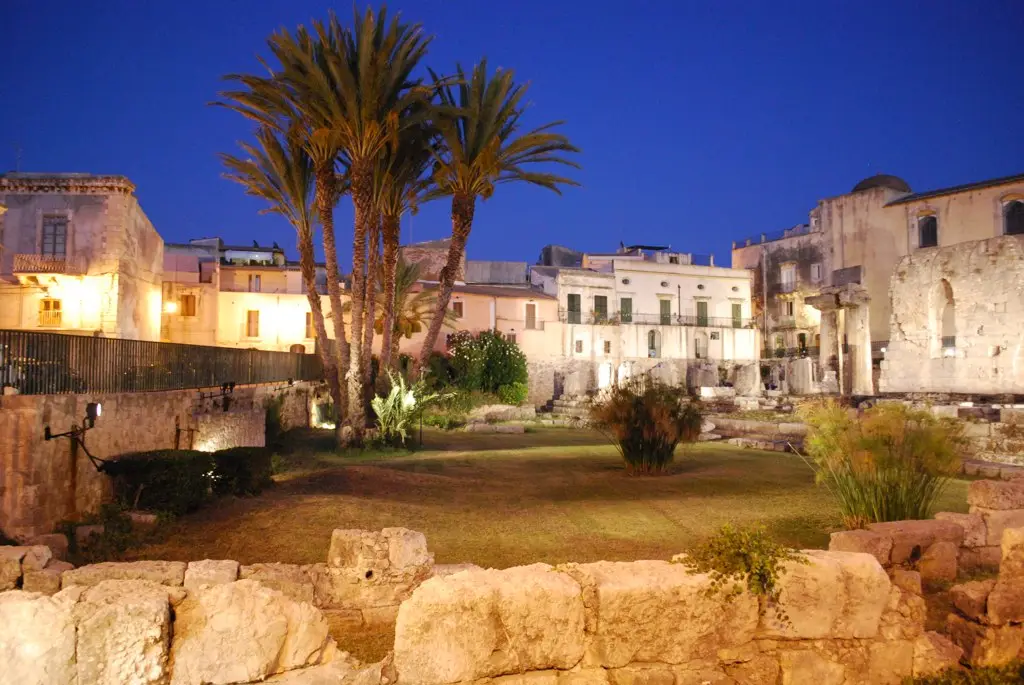
UNESCO · Ortigia and Neapolis
The first Doric temple in Sicilian stone (6th century BC), on Ortigia. Large remains of the anta columns and of the architrave survive.
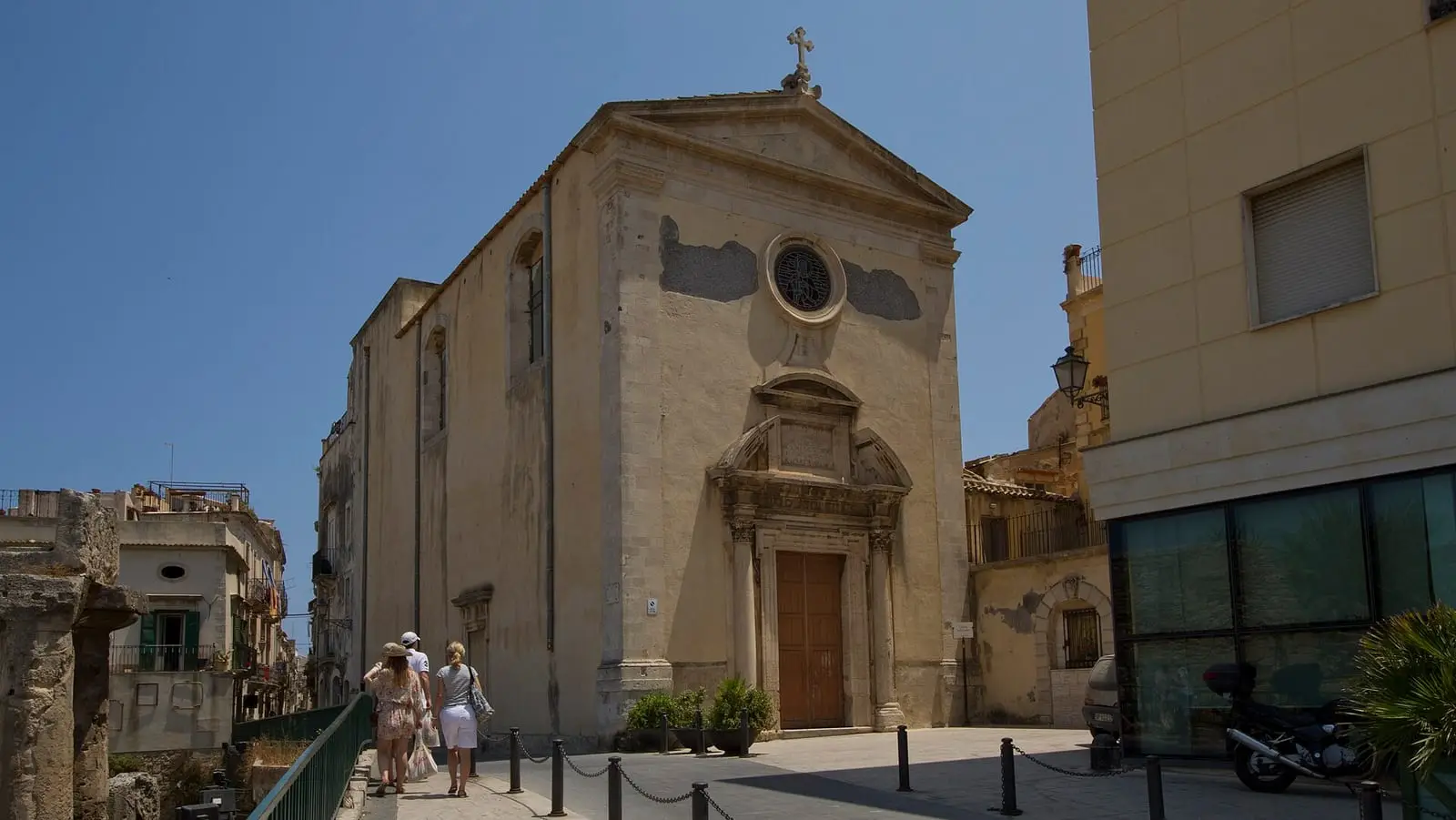
Churches
Simple on the outside but rich in works of art, it overlooks the area near the Temple of Apollo.
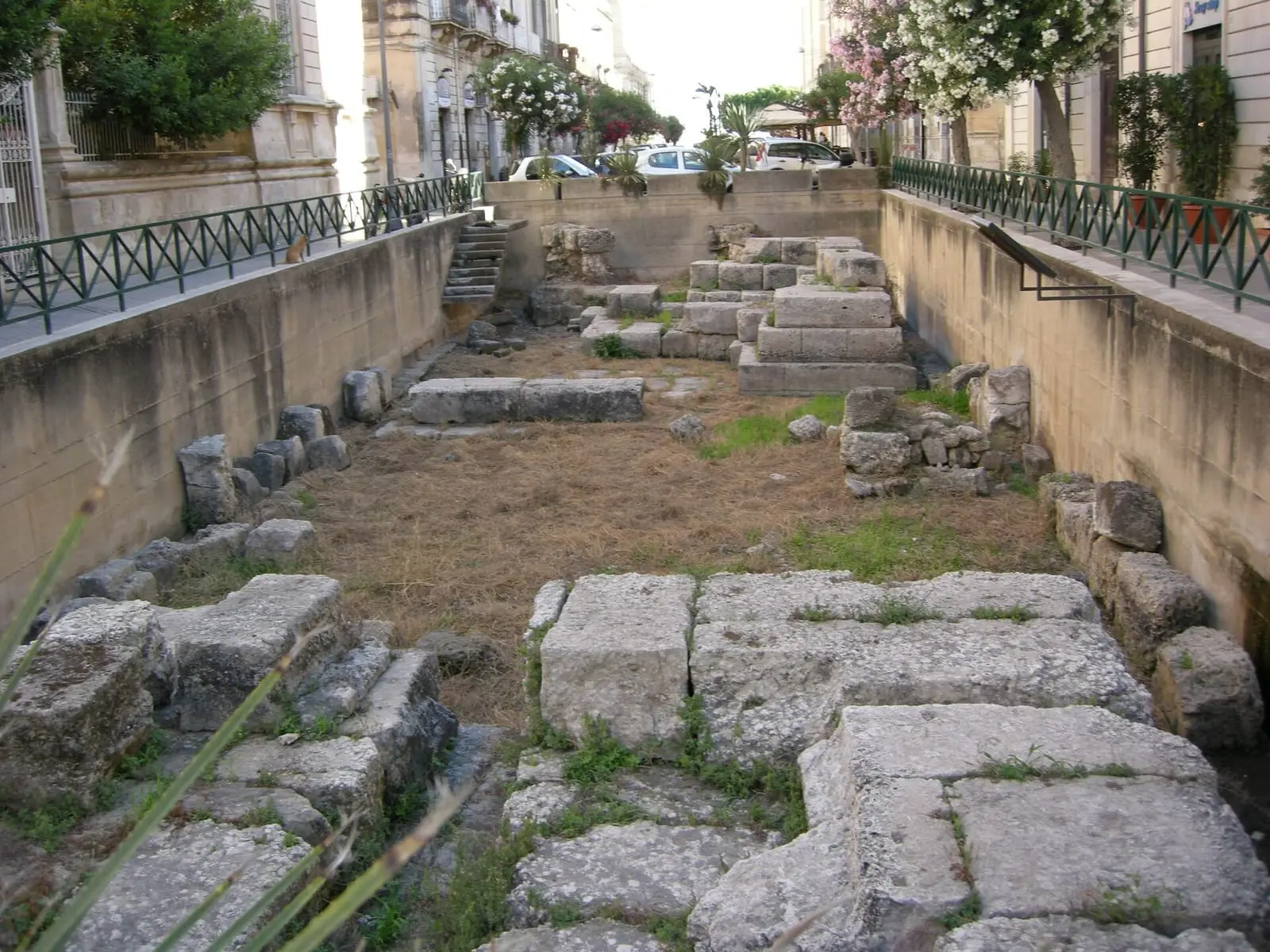
Archaeological sites
The ancient gateway to the Dionysian fortress of Ortigia, part of the walls that encircled the island and linked it to the Eurialo Castle.
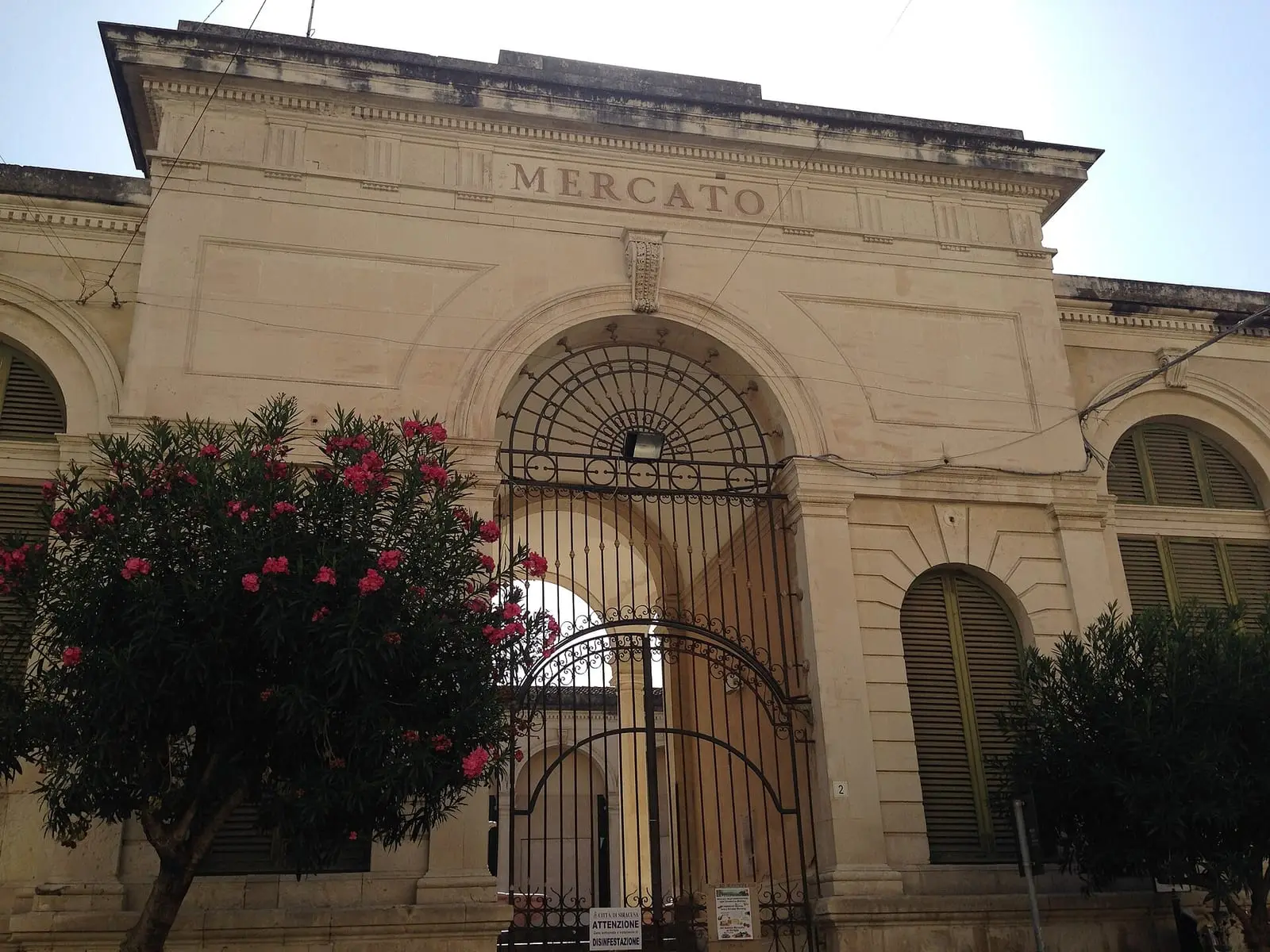
Other places
A restored historic building, now a venue for events, exhibitions and cultural initiatives in the heart of Ortigia.
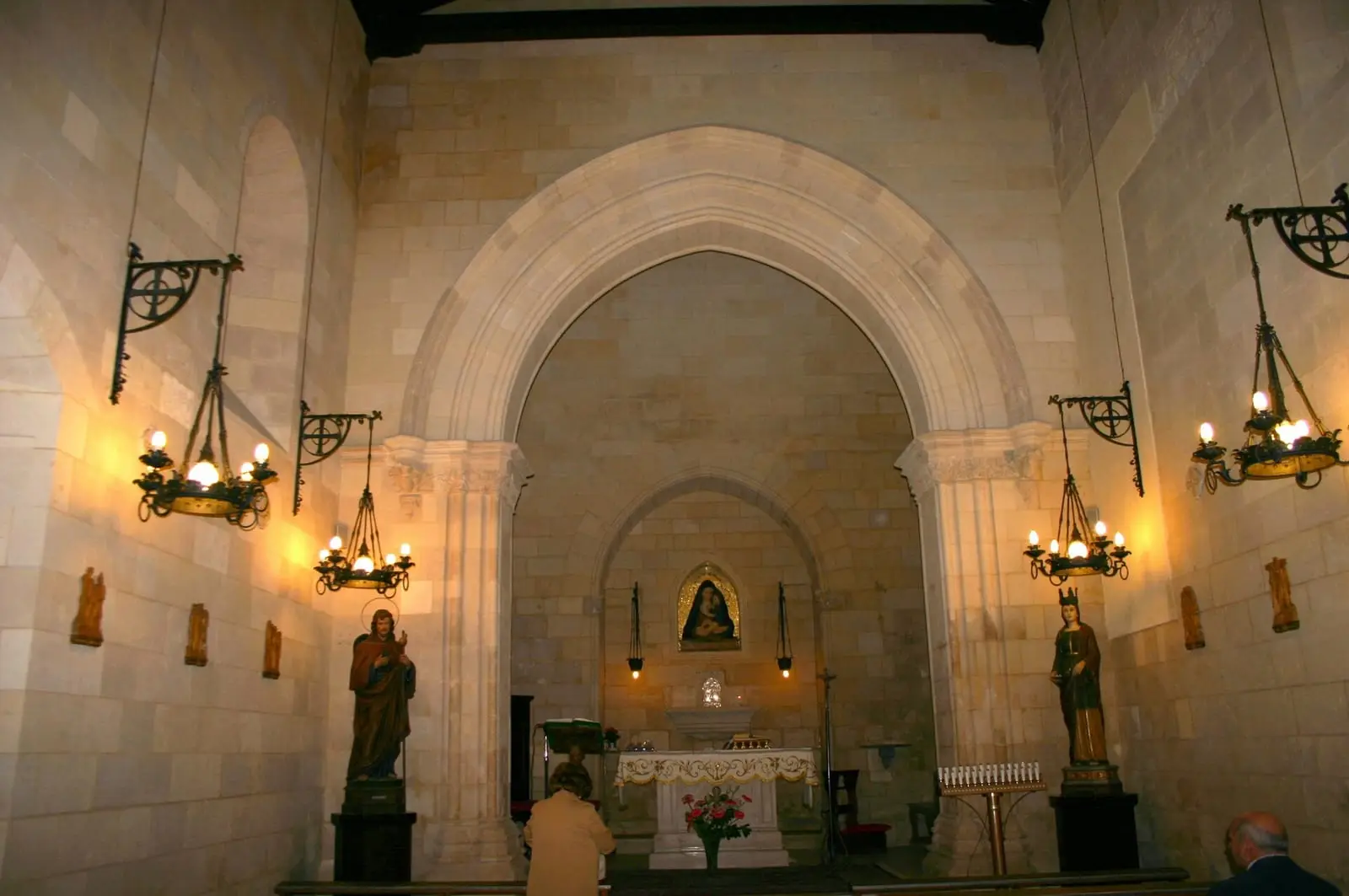
Churches
A Renaissance church with sixteenth-century frescoes and a two-light loggia.
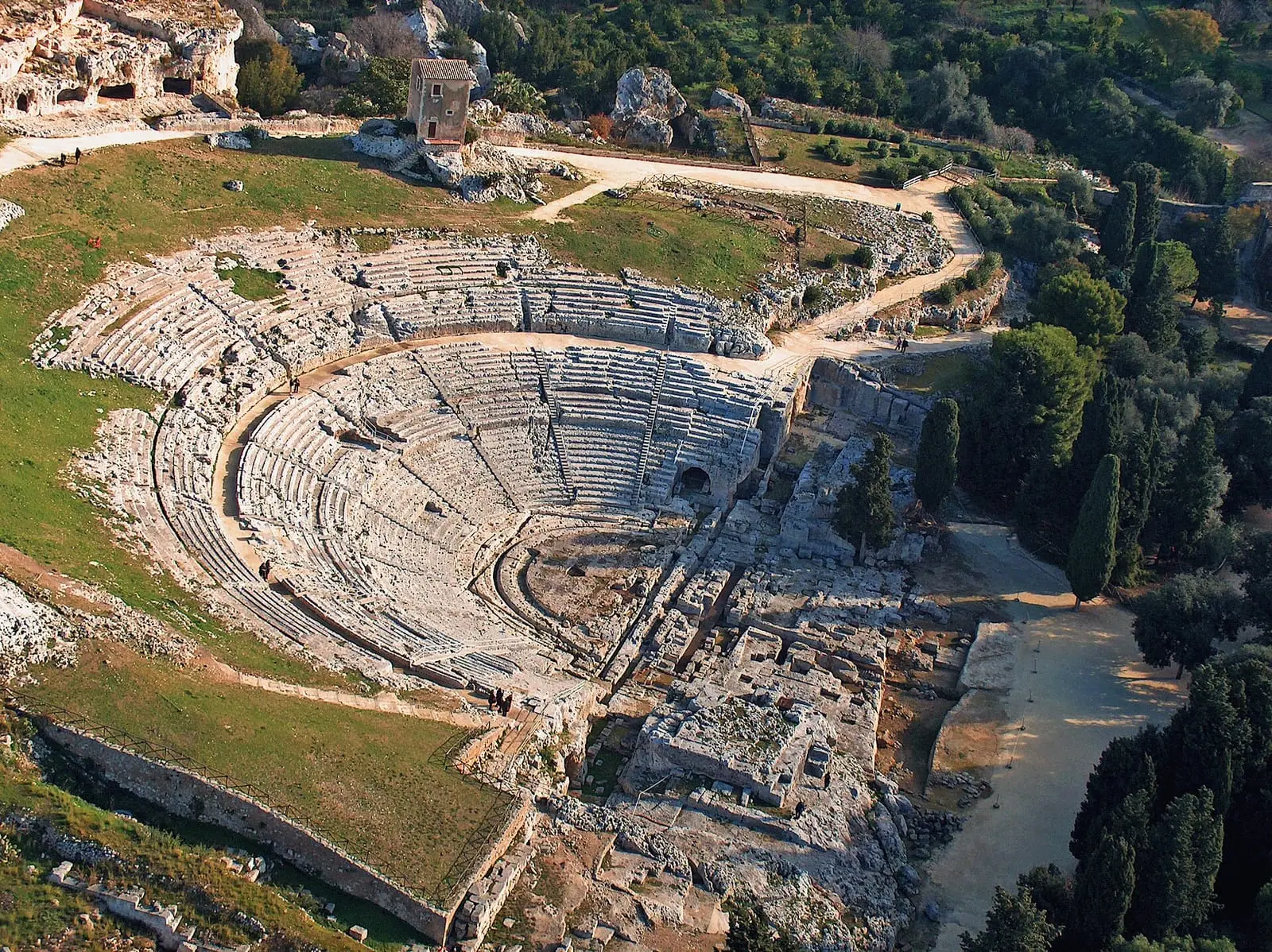
UNESCO · Ortigia and Neapolis
Built in the 5th century BC in the natural quarry of Temenite, it seated up to 15,000 spectators and still hosts seasons of classical performances.
1.3 km 19′ on foot
Location on Google MapsPhoto: fotovideomike from Italia (Michele Ponzio, @michele_ponzio) · CC BY-SA 2.0
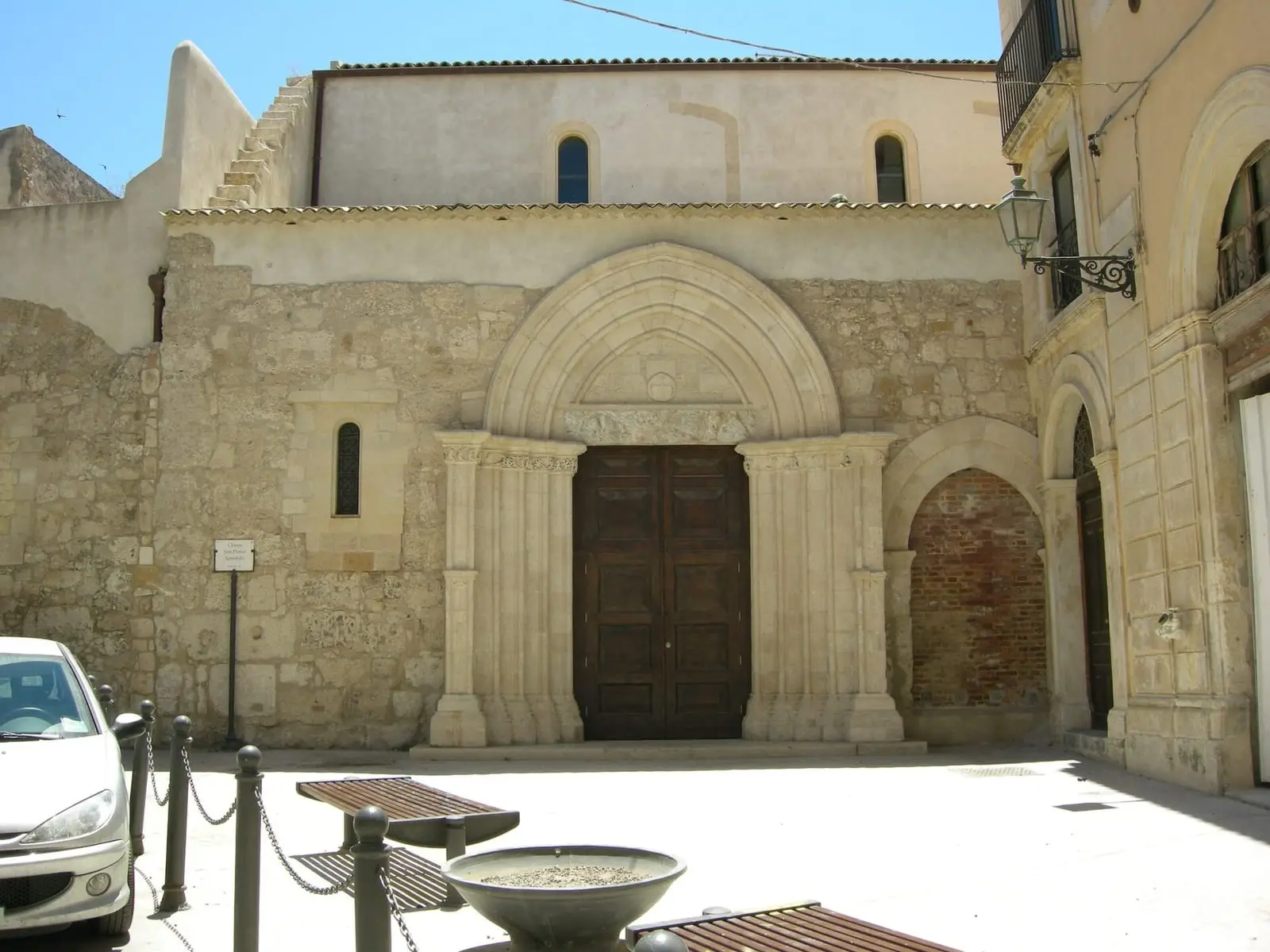
Churches
Among the oldest, with a crypt and a semicircular Byzantine apse.
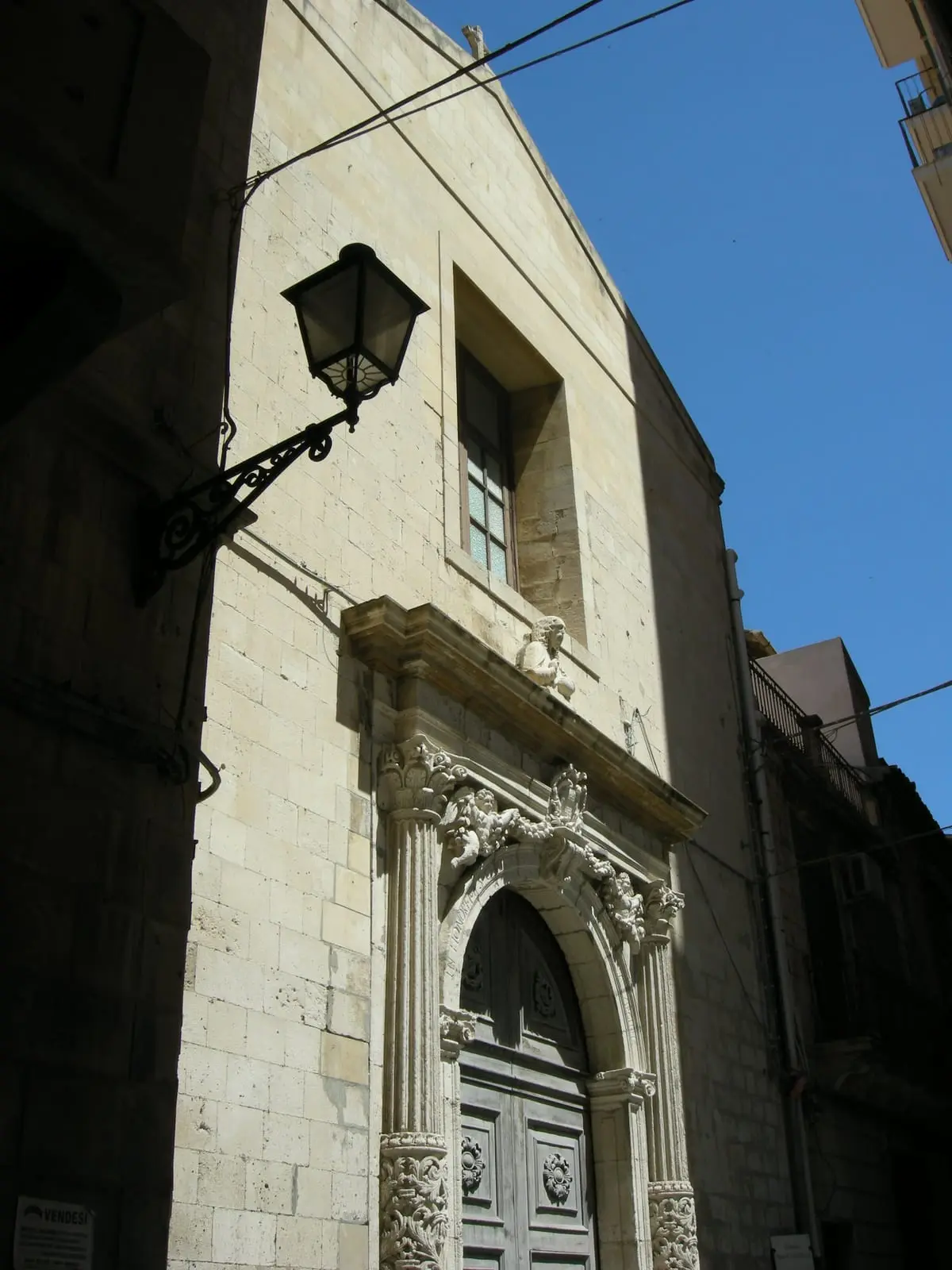
Churches
A small historic church in the centre of Syracuse, often passed over by the usual itineraries.
Museums
A permanent exhibition with working models of the two great minds, between technological inventions and scientific applications.
1.3 km 19′ on foot
Location on Google Maps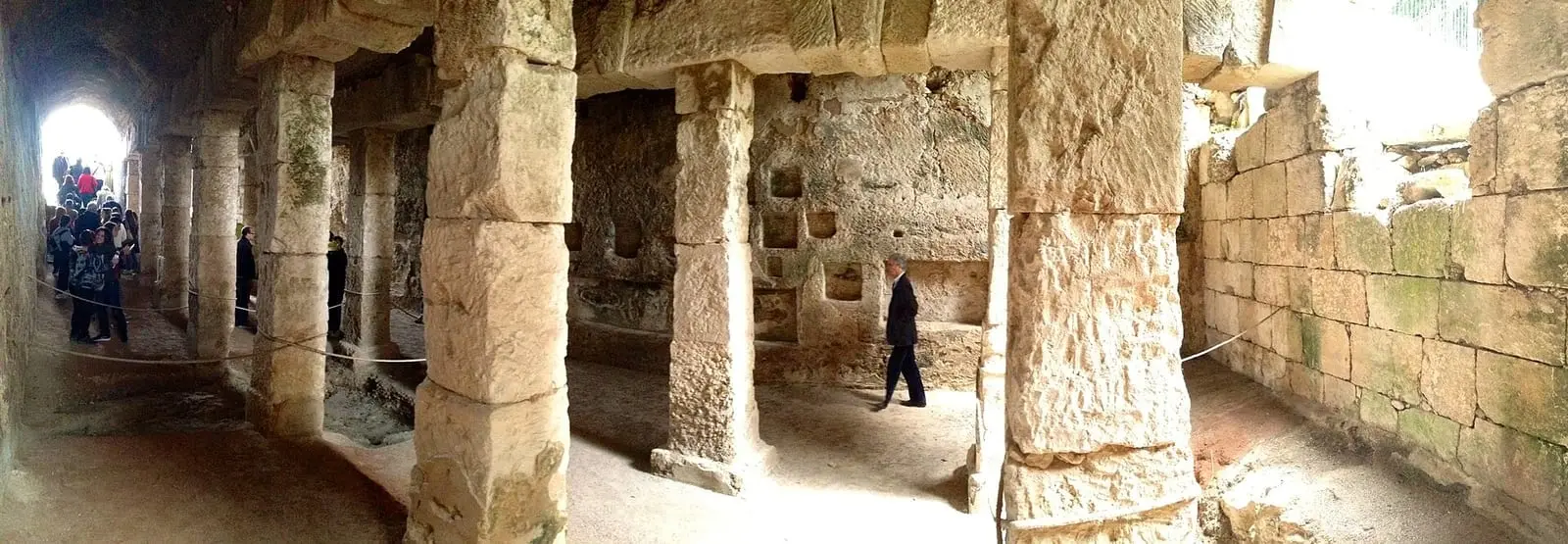
Archaeological sites
A large underground cistern from Roman times, with arcades and barrel vaults, used to collect drinking water.
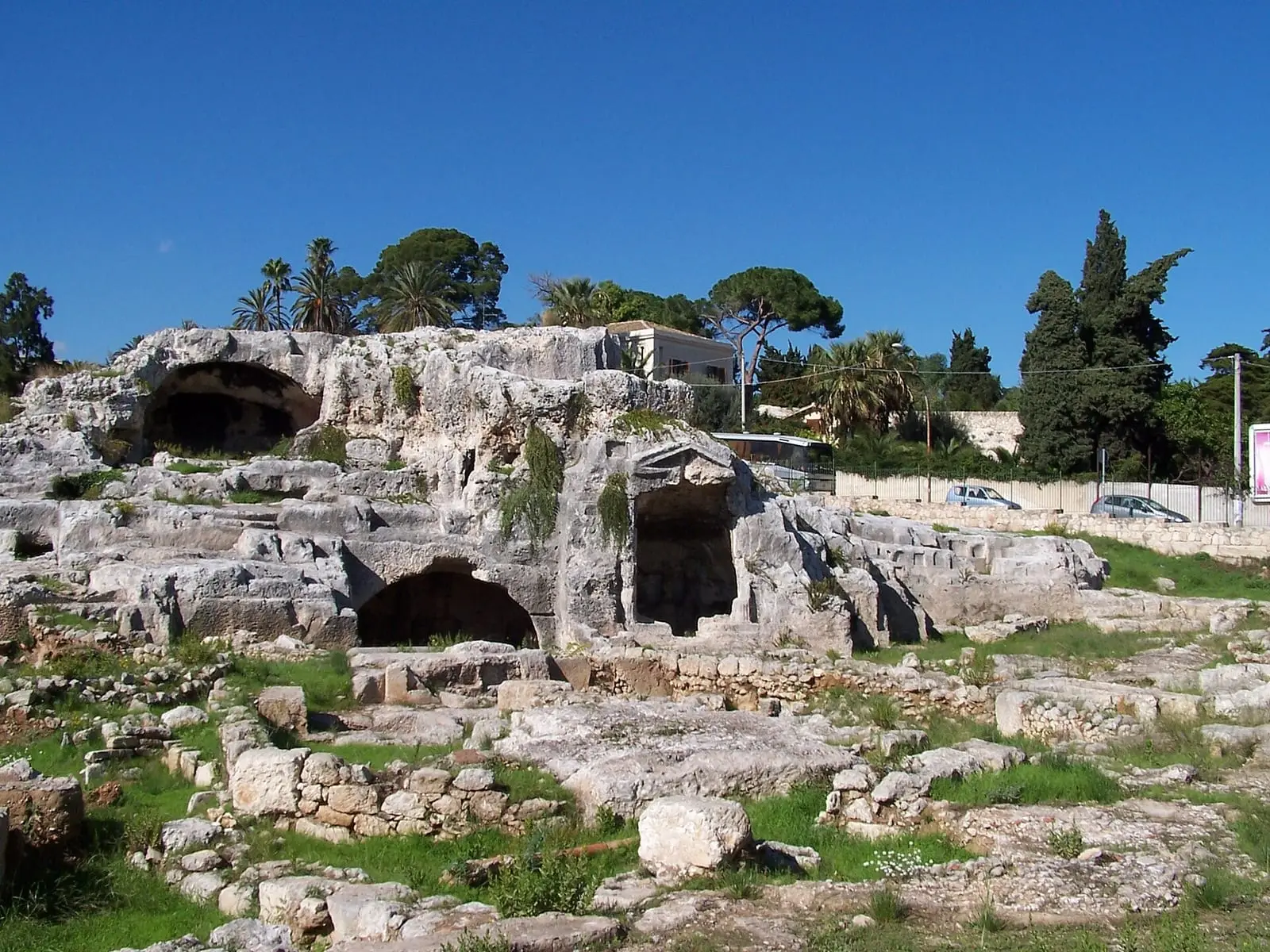
Archaeological sites
A Roman-era funerary monument traditionally associated with the great mathematician, with niches and geometric decoration.
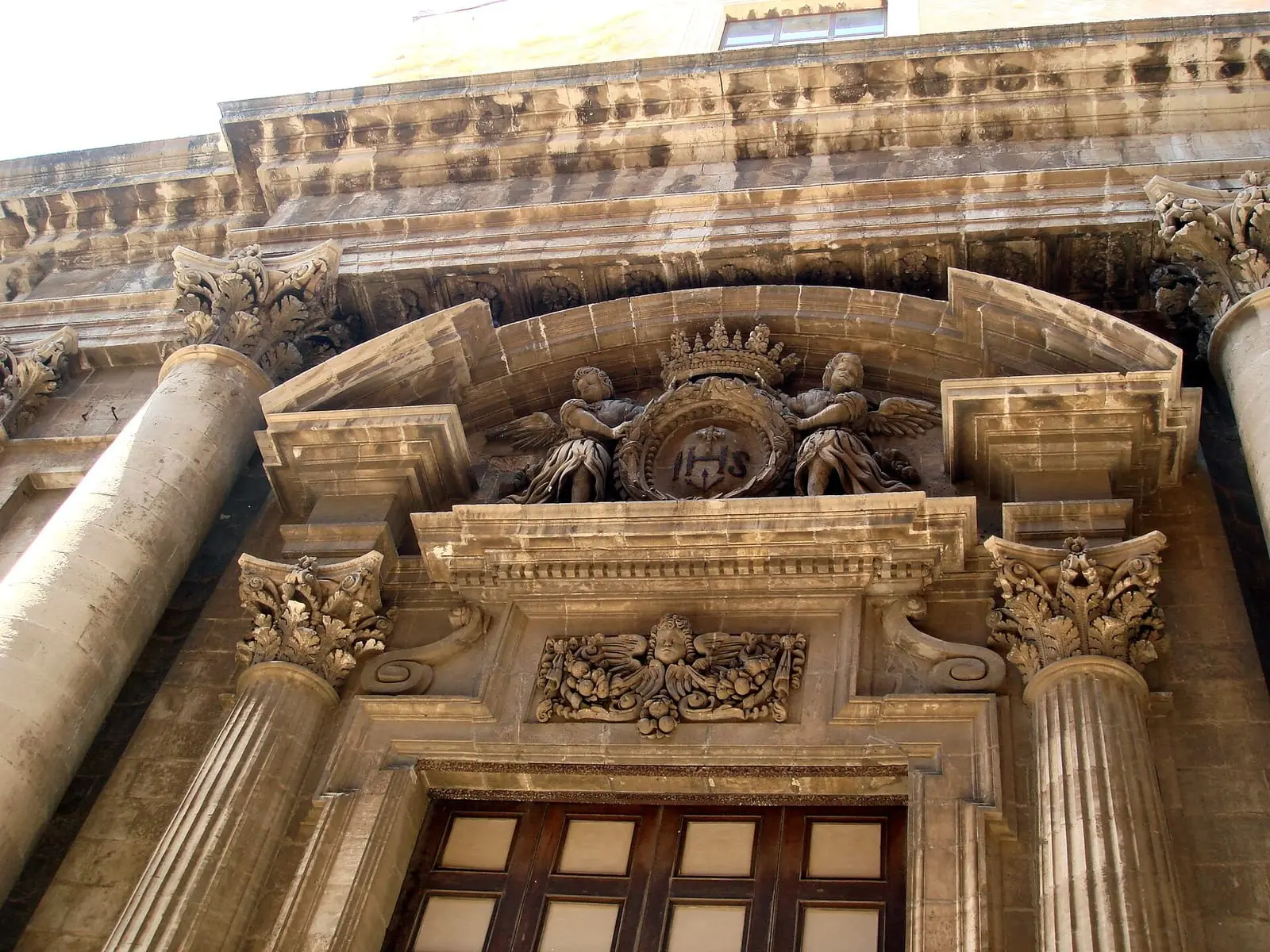
Churches
Rich in marble altars and canvases, one of the most imposing examples of the Jesuit style.
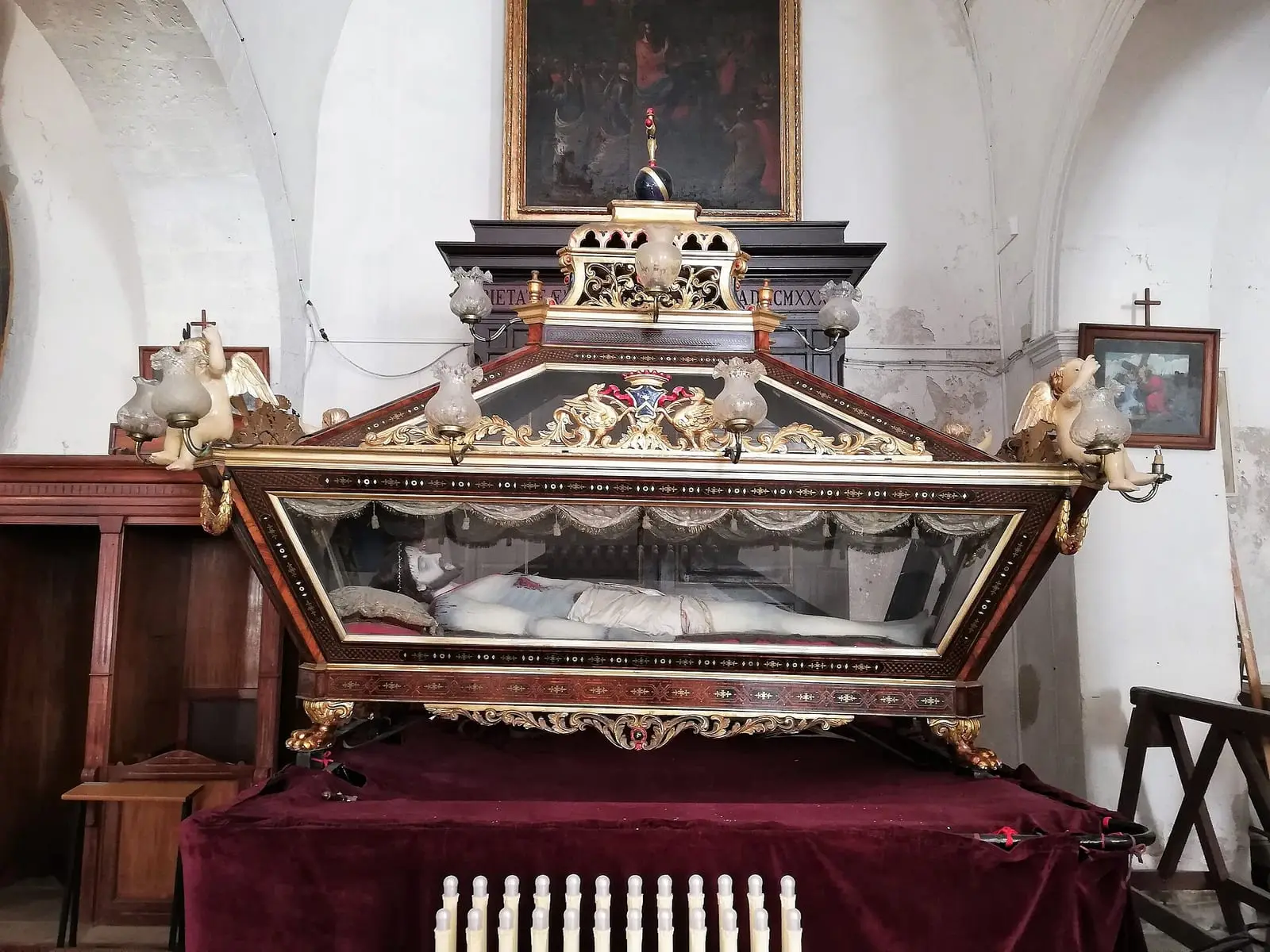
Churches
A baroque church with a convex façade and fine eighteenth-century stuccoes.
Churches
Close to the sea, it is a spiritual landmark for the fishermen and the people of the neighbourhood.
1.4 km 20′ on foot
Location on Google Maps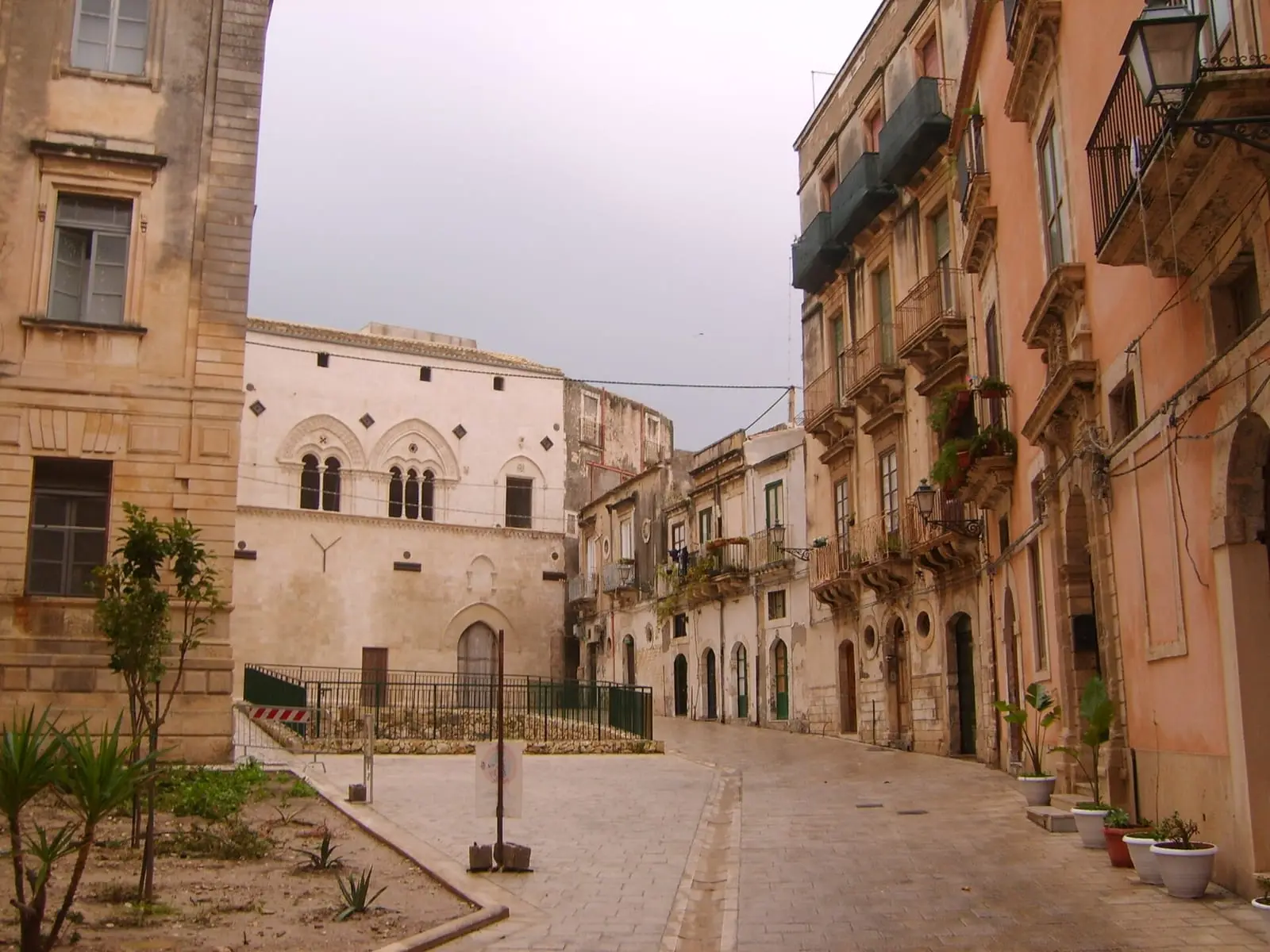
Historic palaces
Built in 1397 in the Chiaramonte Gothic style, with mullioned windows and carved rosettes, an example of medieval noble architecture.
Historic palaces
A fourteenth-century building remodelled, with a Renaissance façade and an arcaded inner courtyard.
Archaeological sites
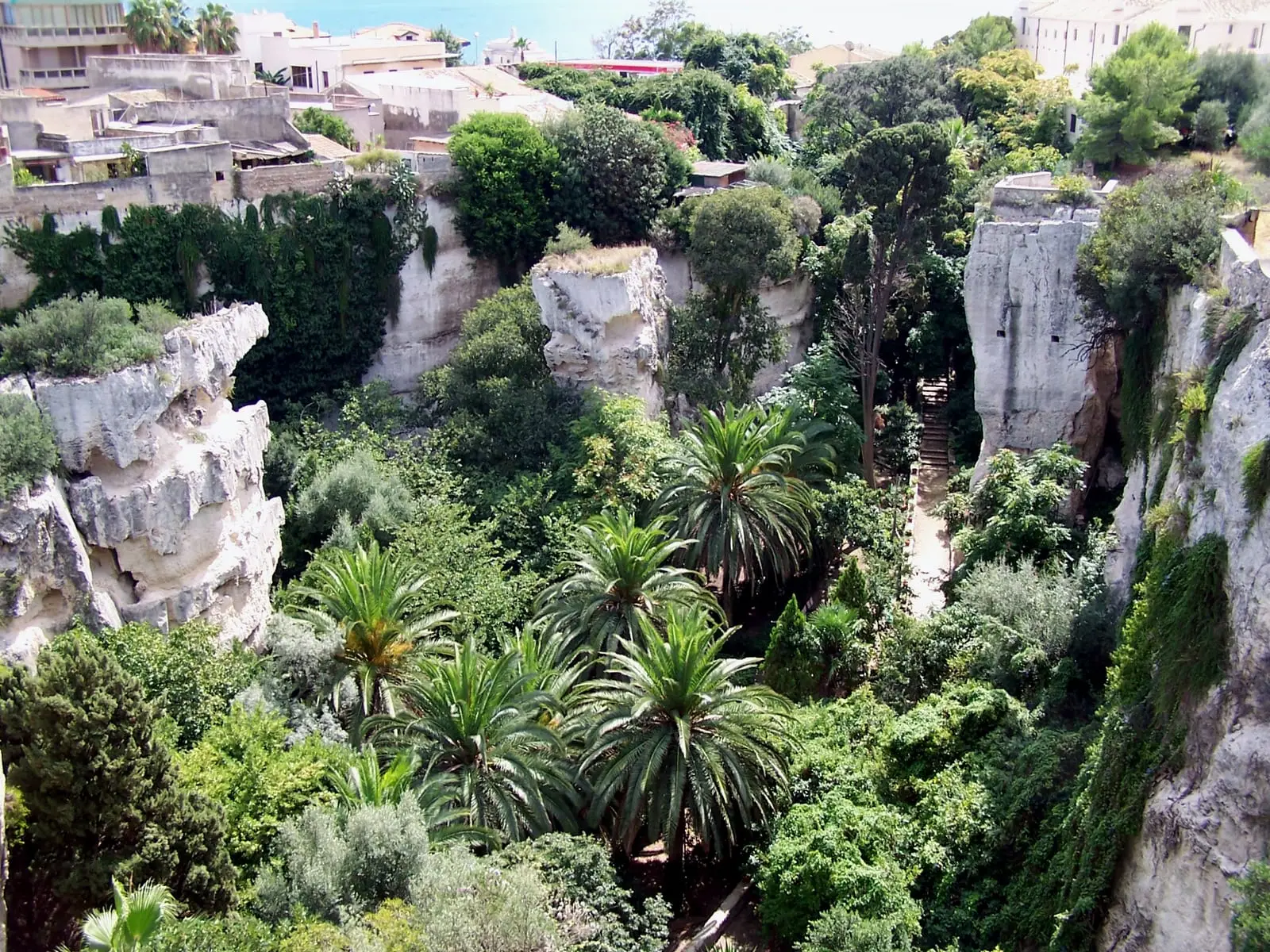
The largest of the Syracusan quarries, used as a limestone quarry from the 6th century BC. The Capuchin friars turned it into a kitchen garden in the 16th century.
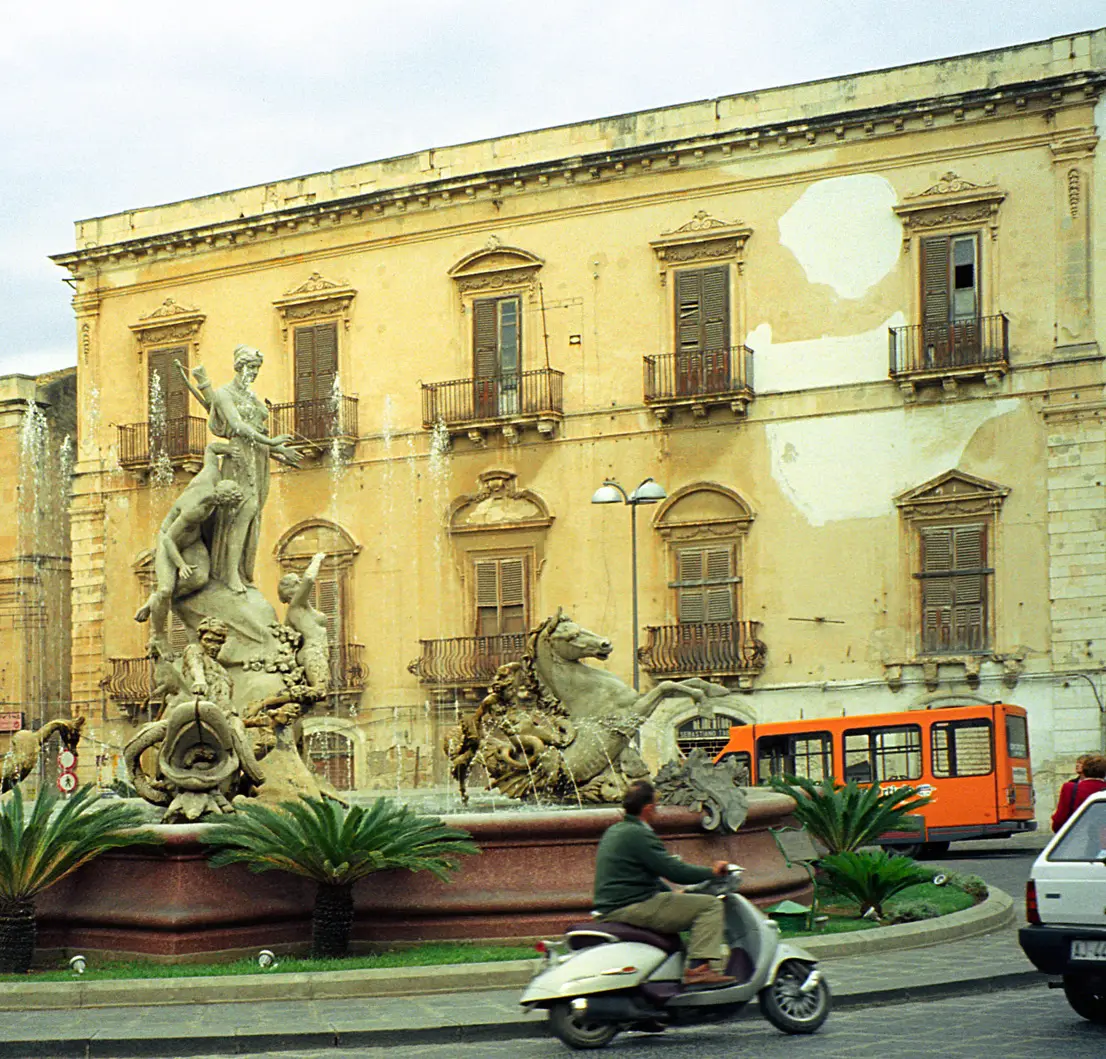
Other places
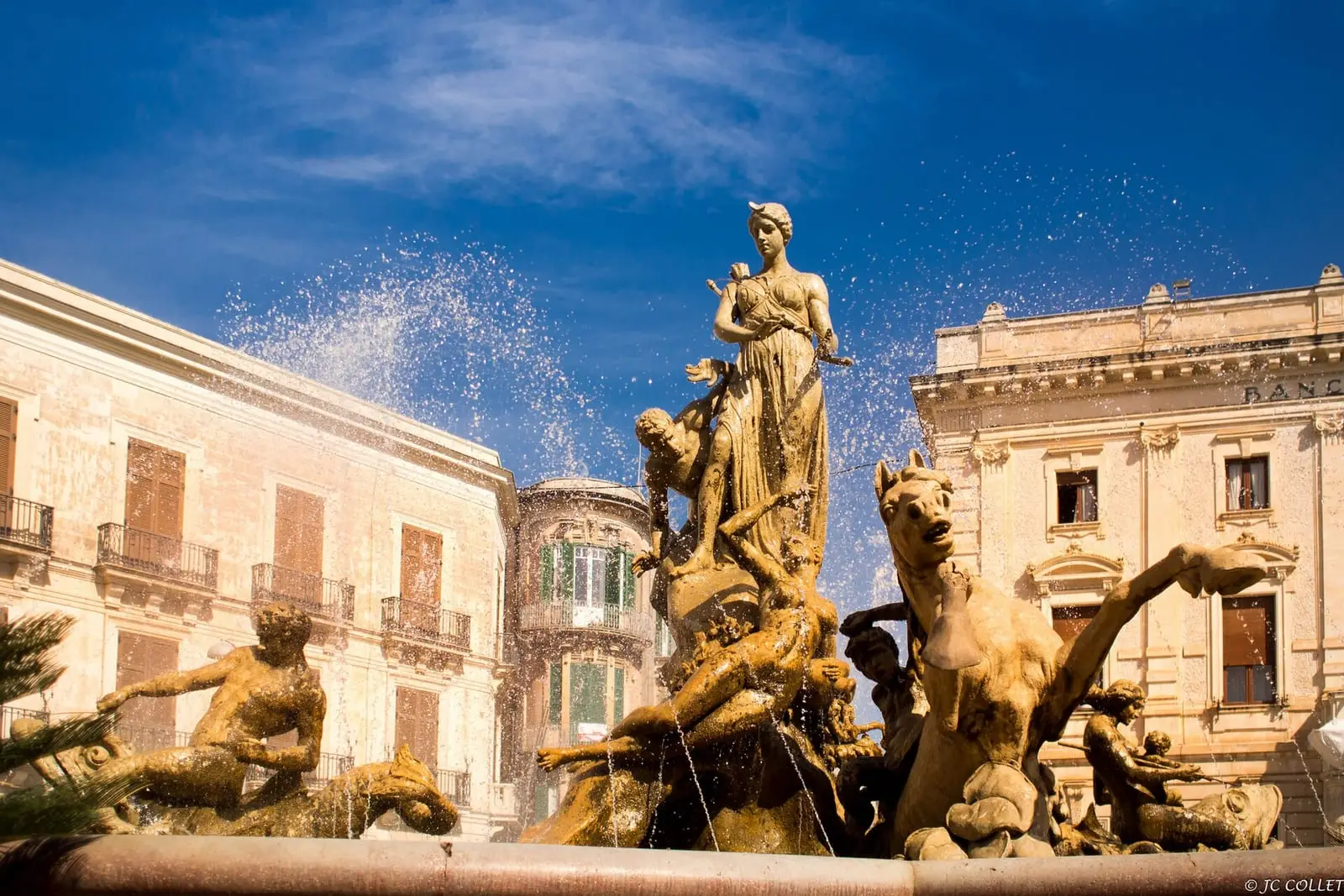
At the heart of Ortigia, the square hosts the Fontana di Diana: a monumental work celebrating the myth of Arethusa through sea horses and gods.
Other places
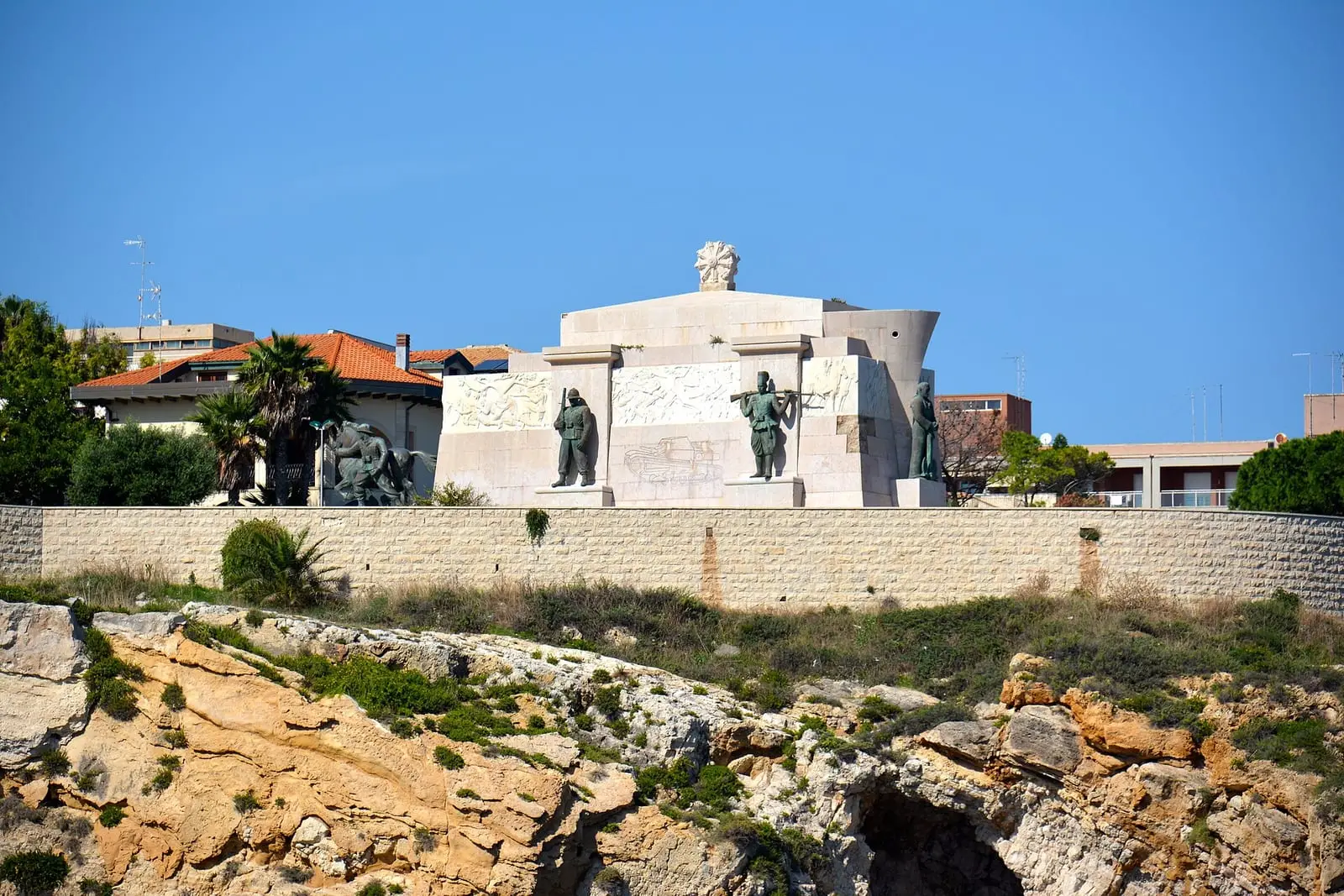
A monument dedicated to the soldiers who fell in the military campaigns in Africa, standing in one of the city’s main squares.
UNESCO · Ortigia and Neapolis
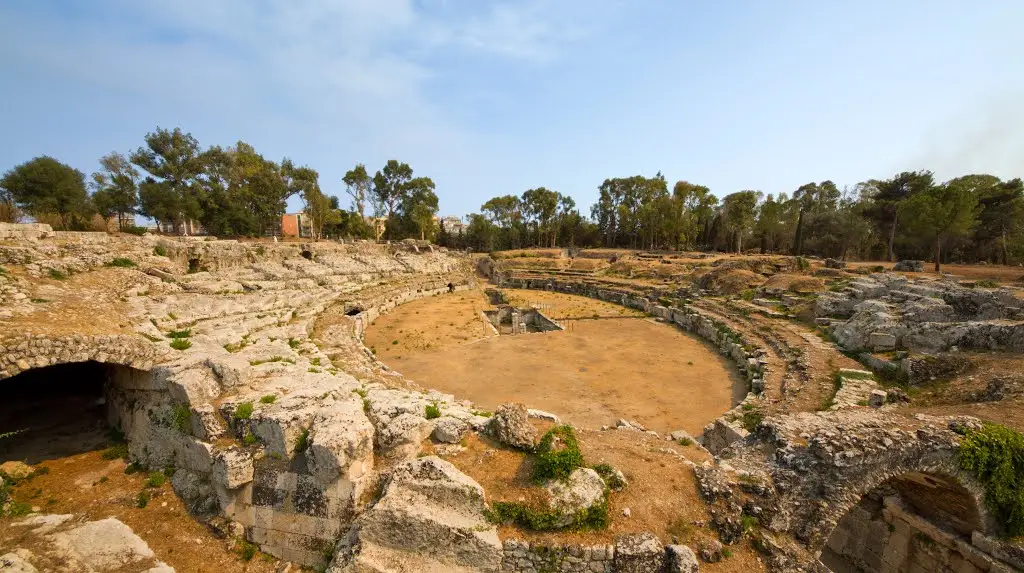
A 1st-century AD work cut into the tufa rock, it hosted gladiators and public games: one of the best-preserved elliptical structures in Sicily.
UNESCO · Ortigia and Neapolis
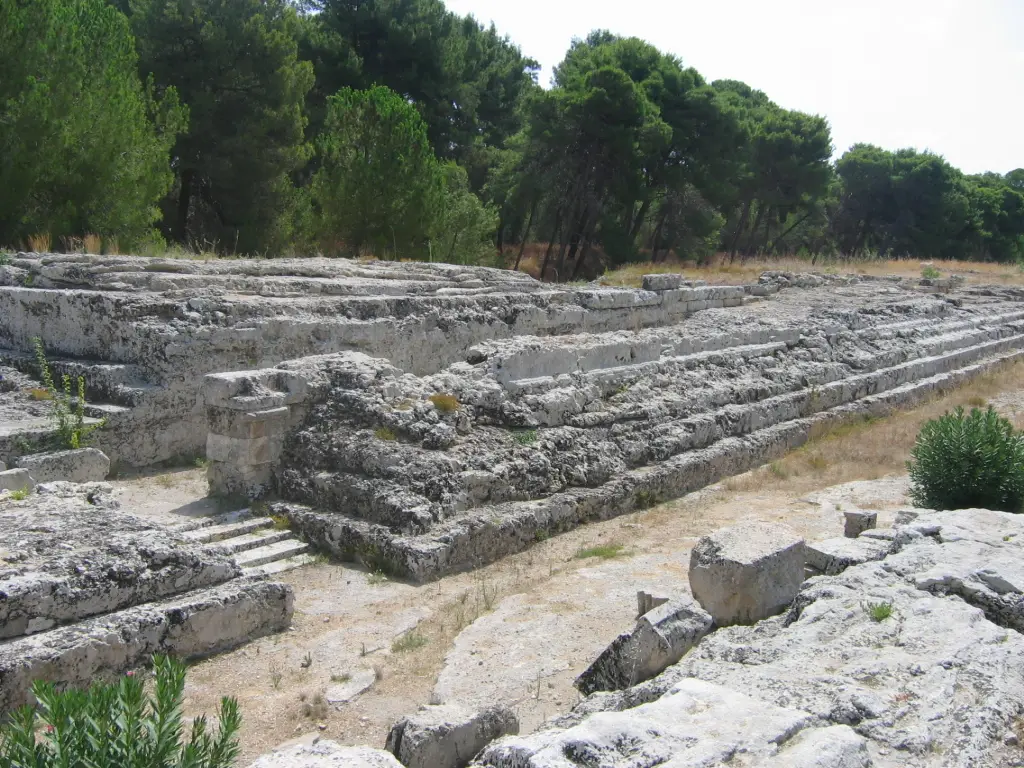
A monumental 3rd-century BC altar dedicated to Zeus Eleutherios, with monumental steps and reliefs still visible today.
UNESCO · Ortigia and Neapolis
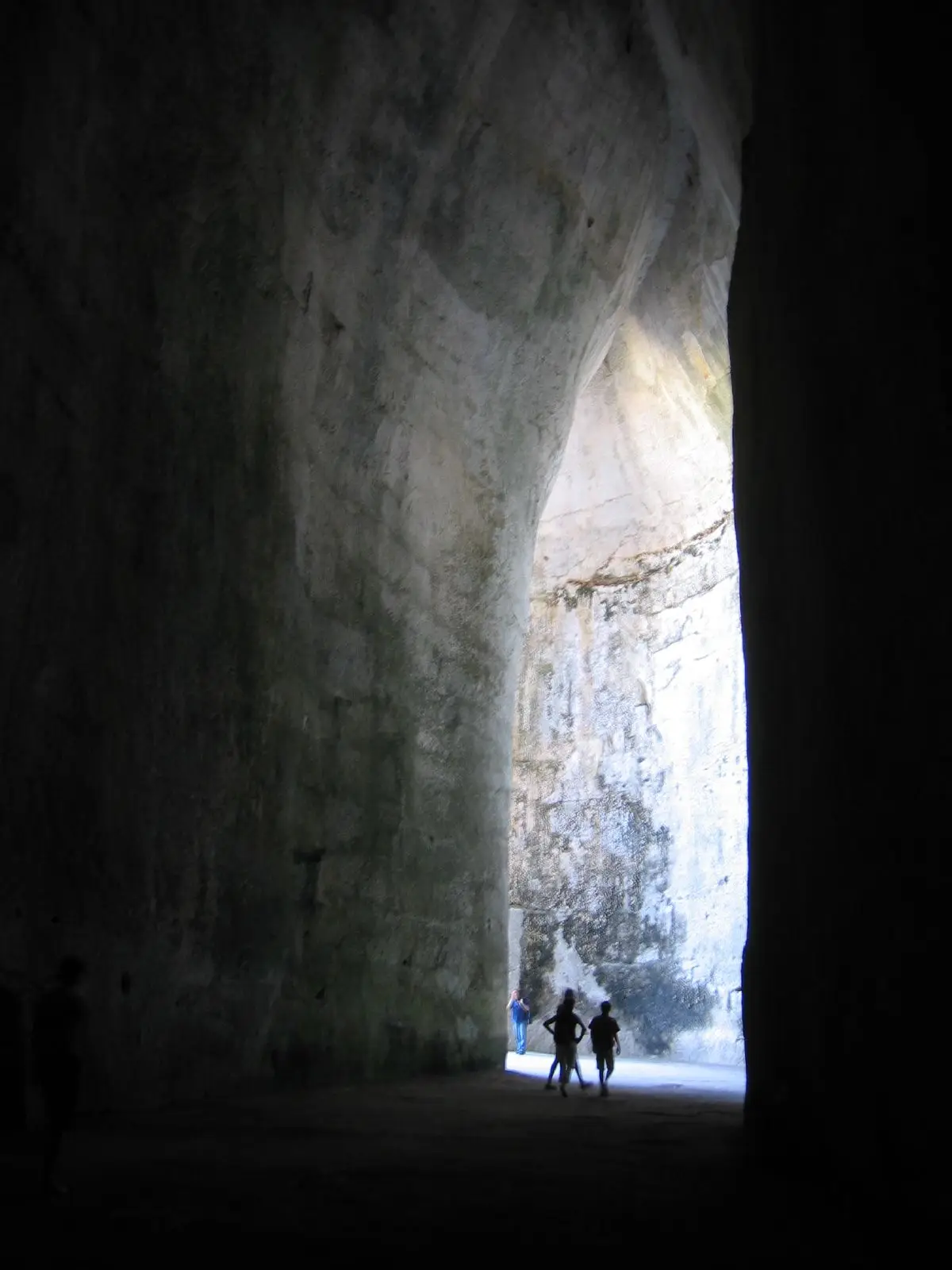
An artificial cave 23 m high, famous for its exceptional acoustics: legend says Dionysius used it to overhear his prisoners.
UNESCO · Ortigia and Neapolis
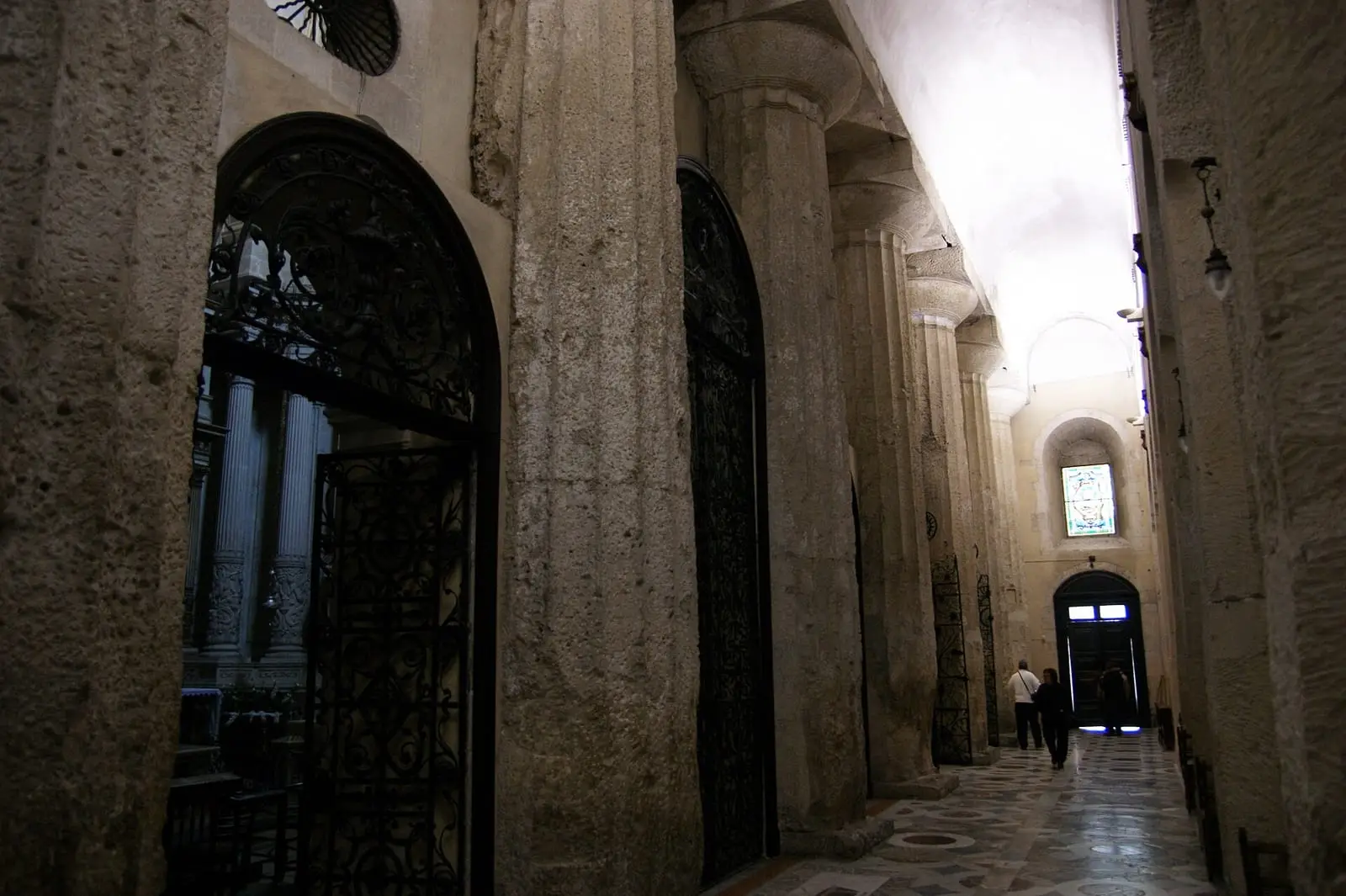
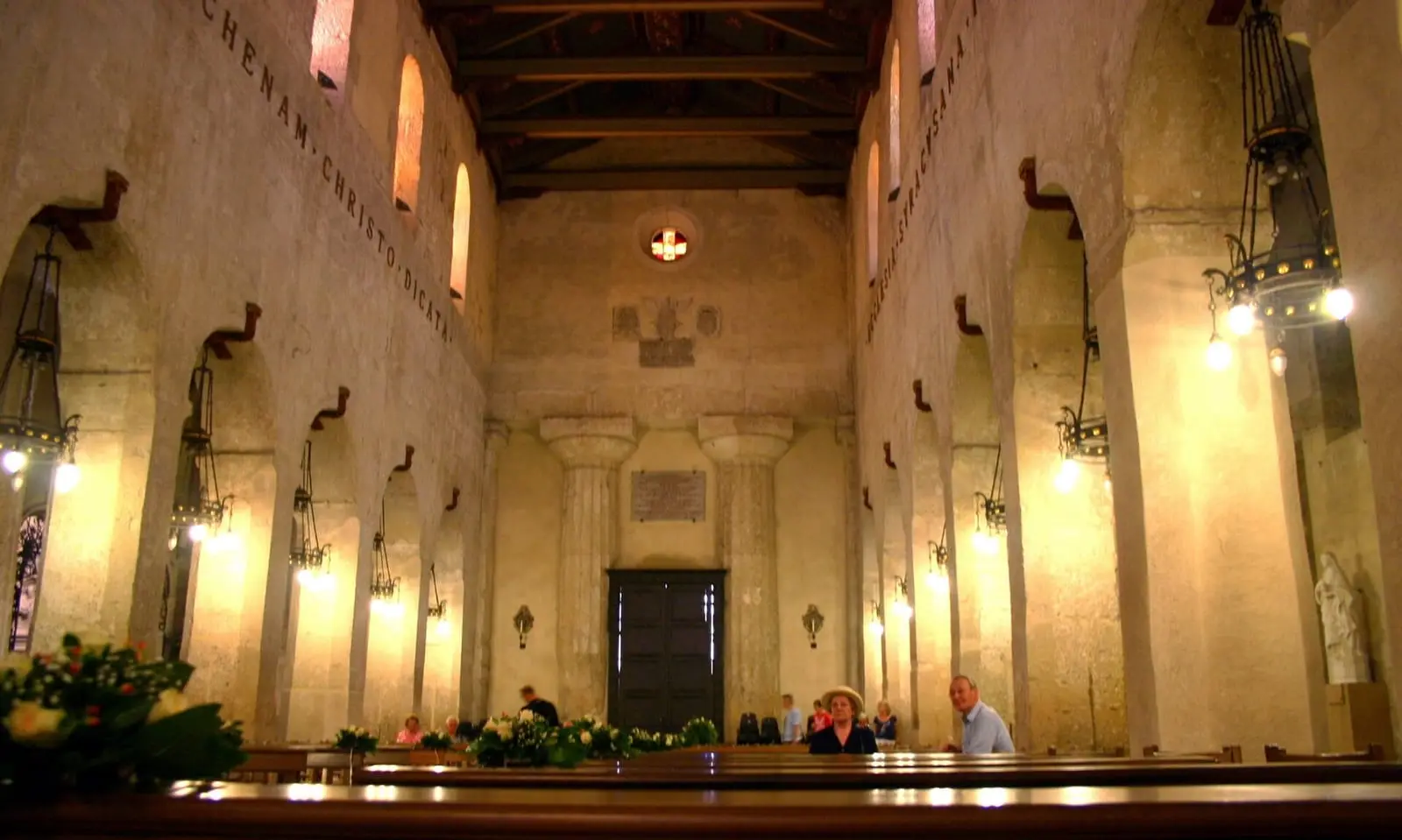
A 5th-century BC Greek temple turned into a Byzantine basilica and later a baroque Duomo, with Doric columns built into the façade.
Churches
Built on the Doric temple of Athena, it brings together Greek, Norman and baroque elements.
Museums
It gathers film memorabilia, vintage projectors and screen costumes, celebrating the bond between Syracuse and the seventh art.
1.5 km 21′ on foot
Location on Google Maps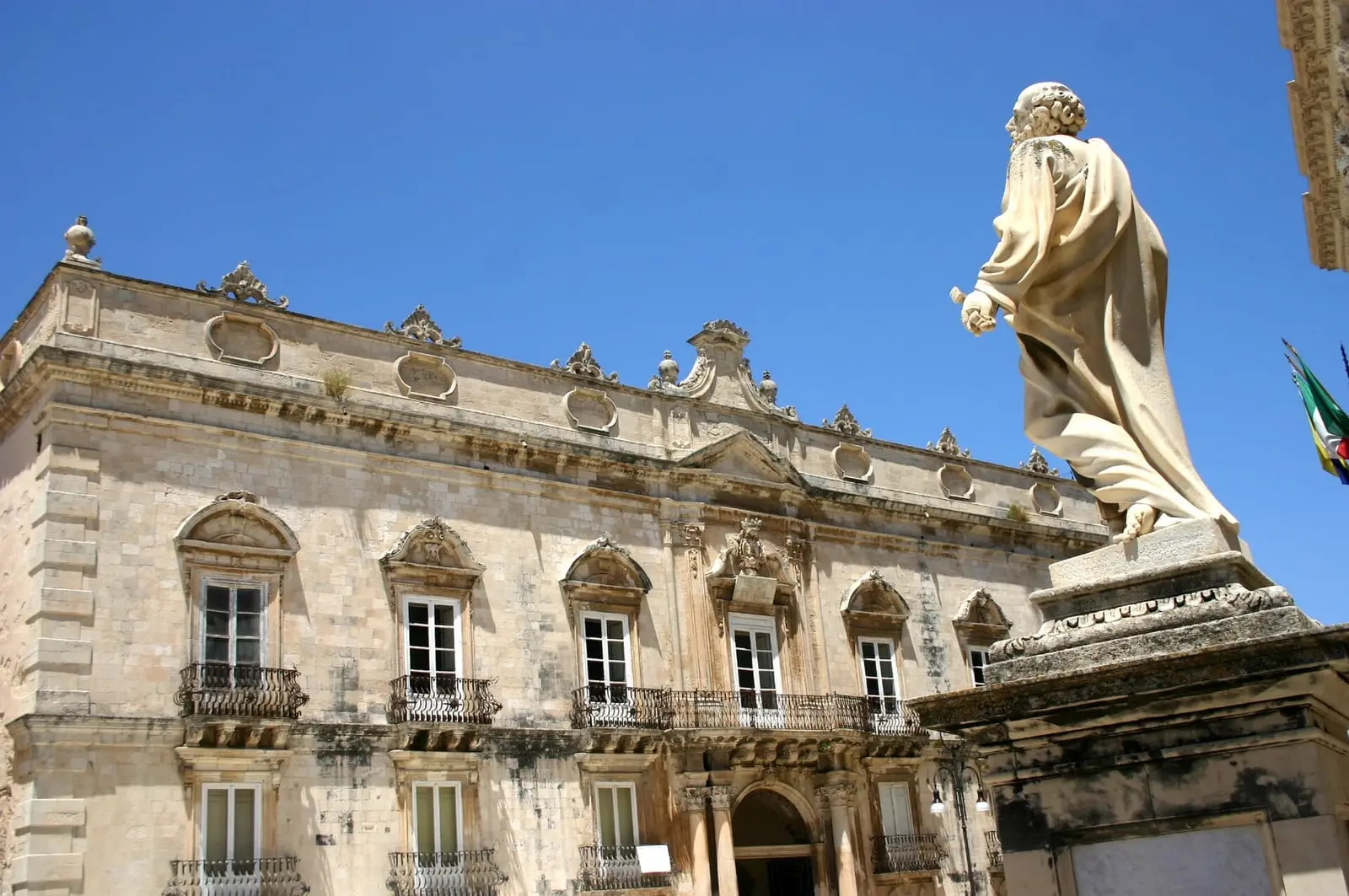
Historic palaces
A masterpiece of Syracusan baroque (18th century), with rich stuccoes and a monumental staircase.
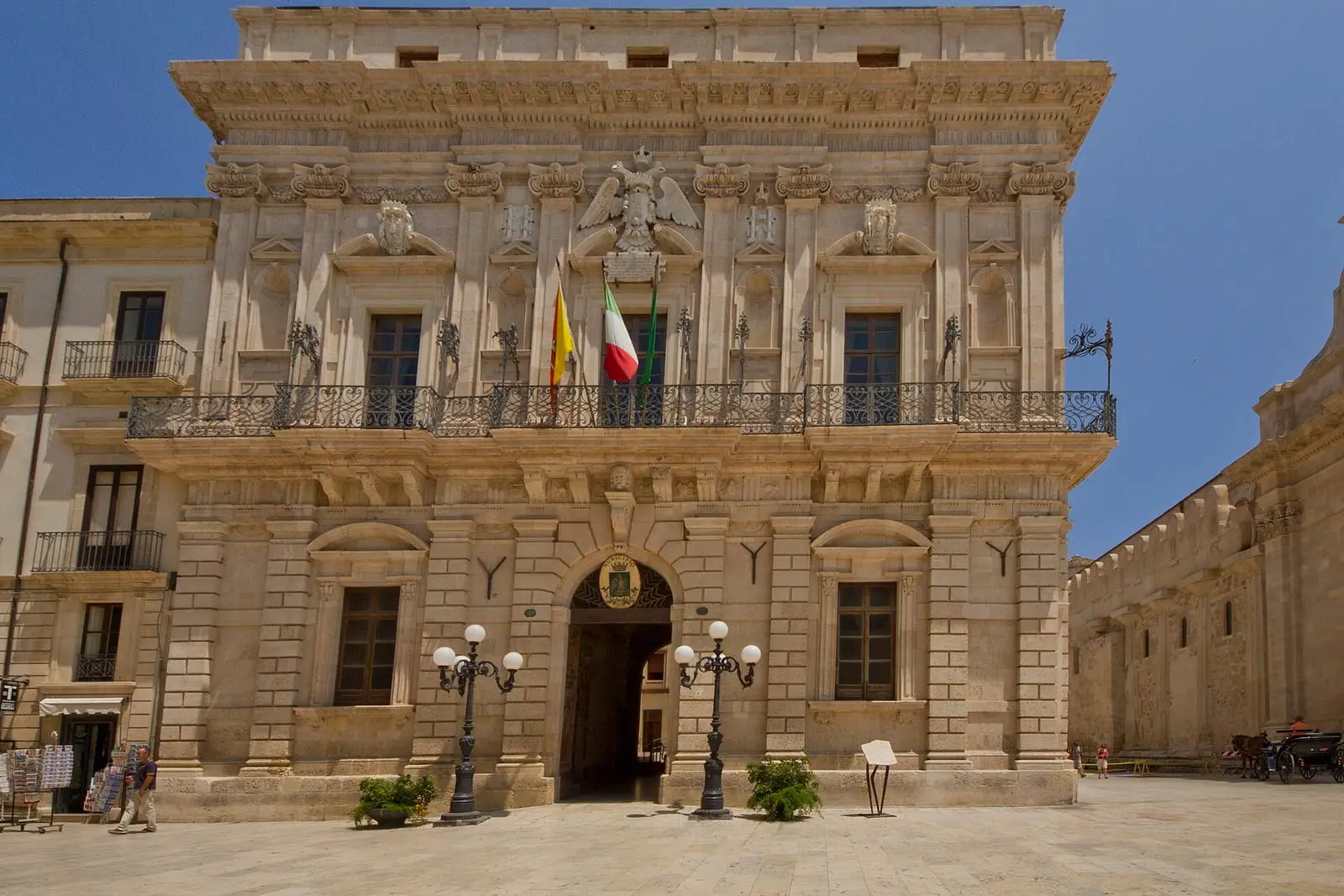
Historic palaces
Known as the “Palazzo del Senato”, built in 1633 in the Sicilian baroque style, today the seat of the Town Hall.
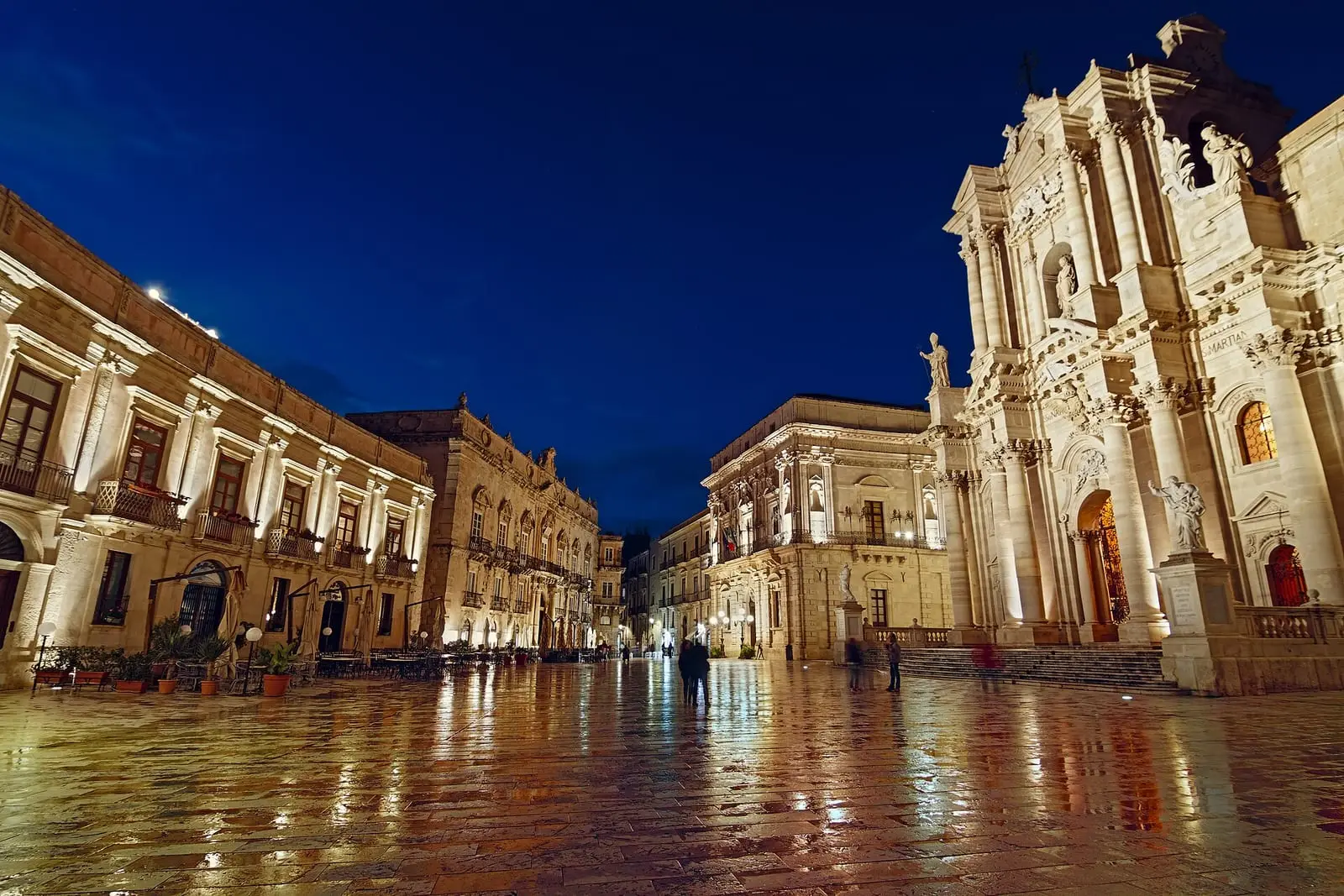
UNESCO · Ortigia and Neapolis
A baroque square flanked by the Bishop’s Palace, the Town Hall and the church of Santa Lucia alla Badia: the civic and religious heart of the city.
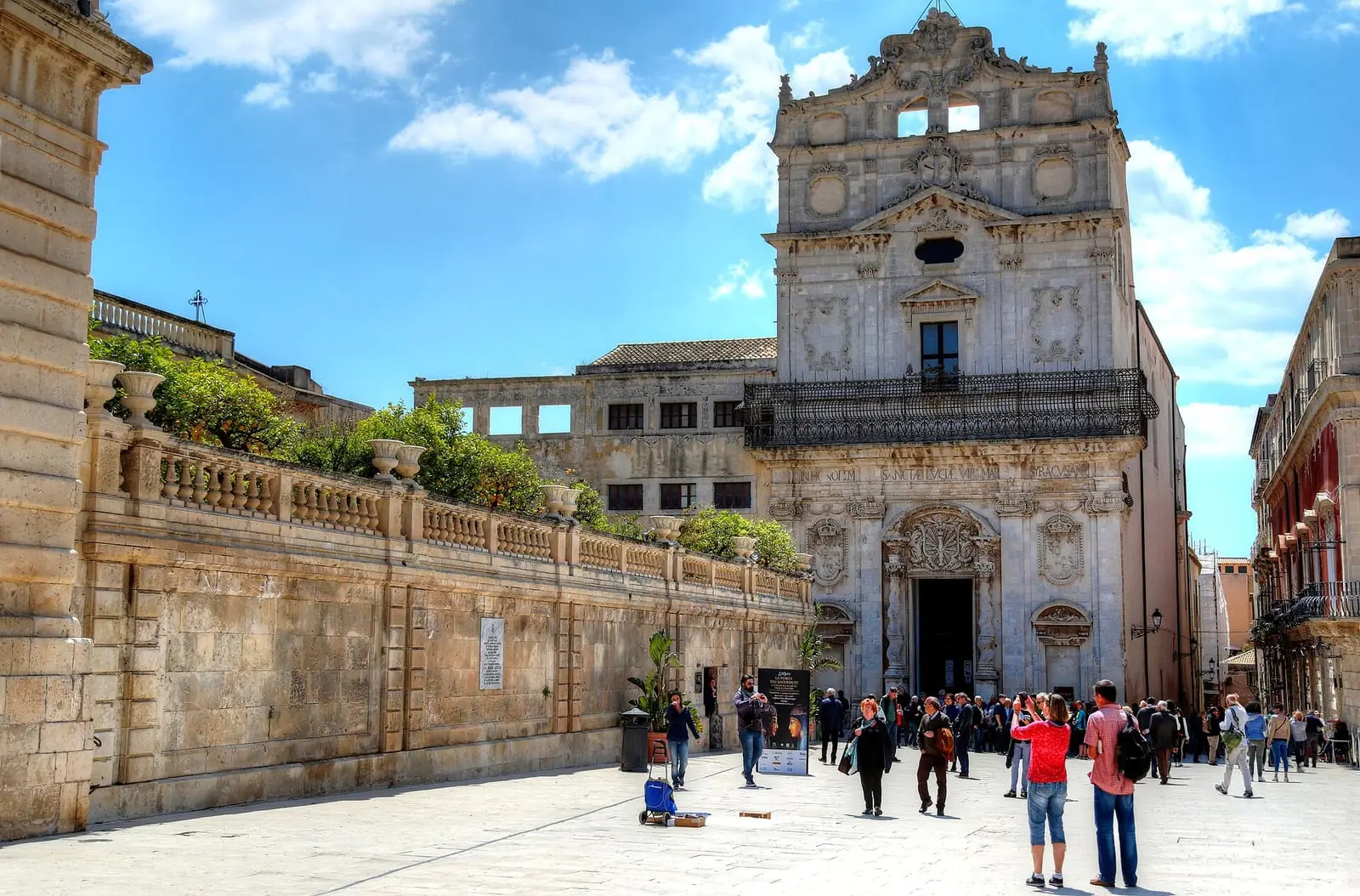
Churches
A baroque church next to the Duomo, with eighteenth-century stuccoes and altars.
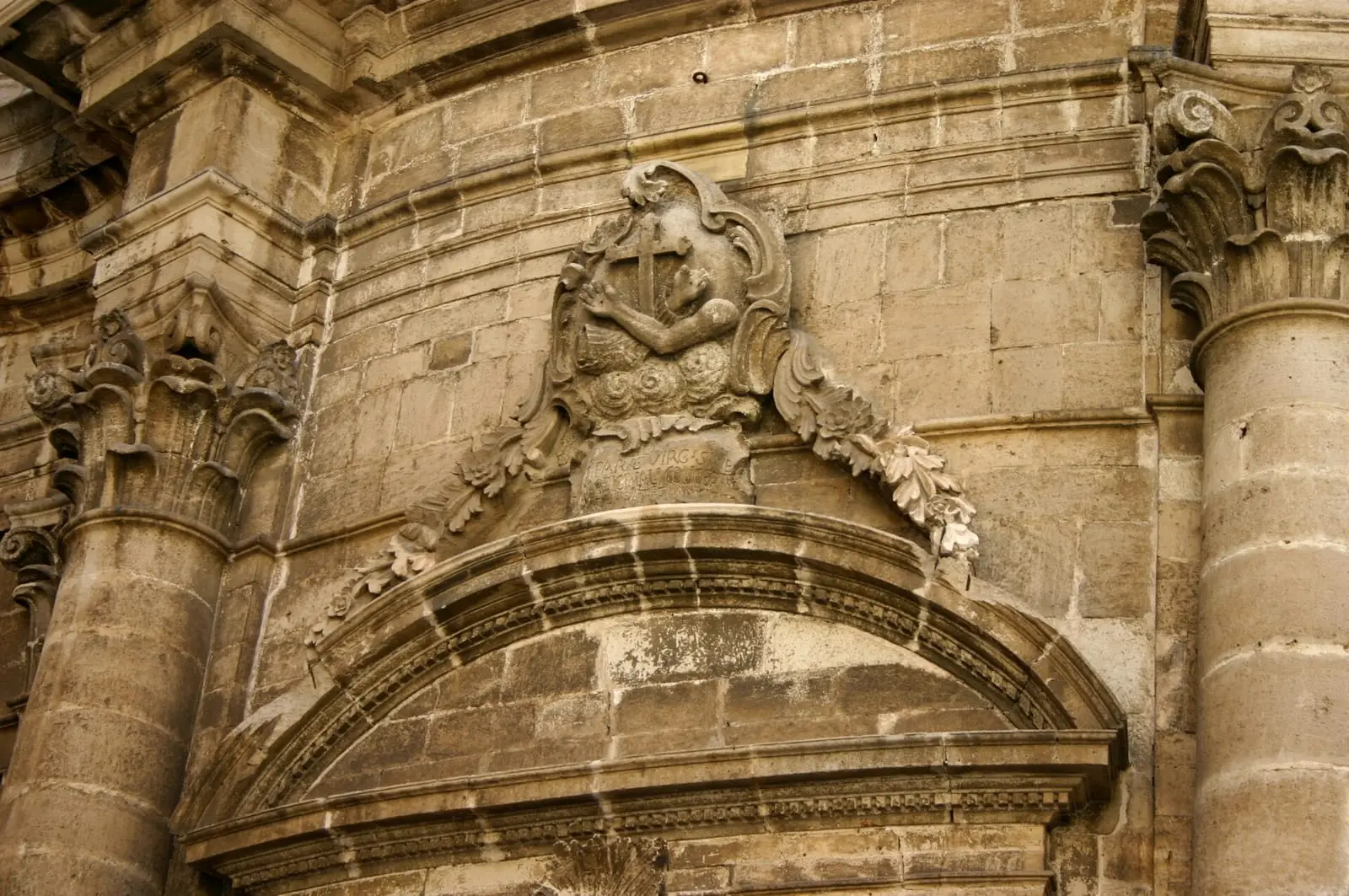
Churches
A baroque church in Piazza Corpaci, known for its front and its interior frescoes.
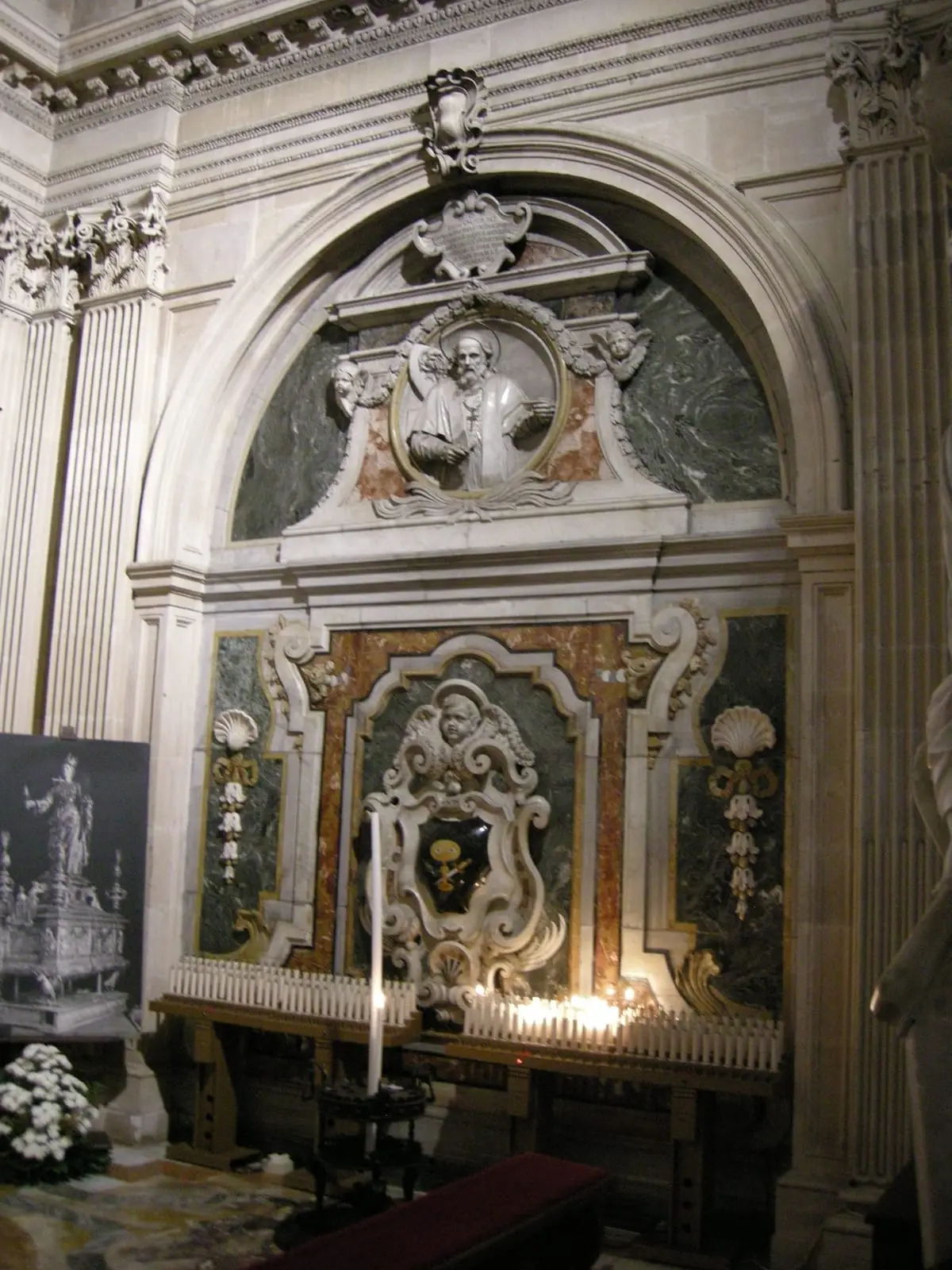
Churches
Inside the Duomo, it keeps the silver statue of the saint.
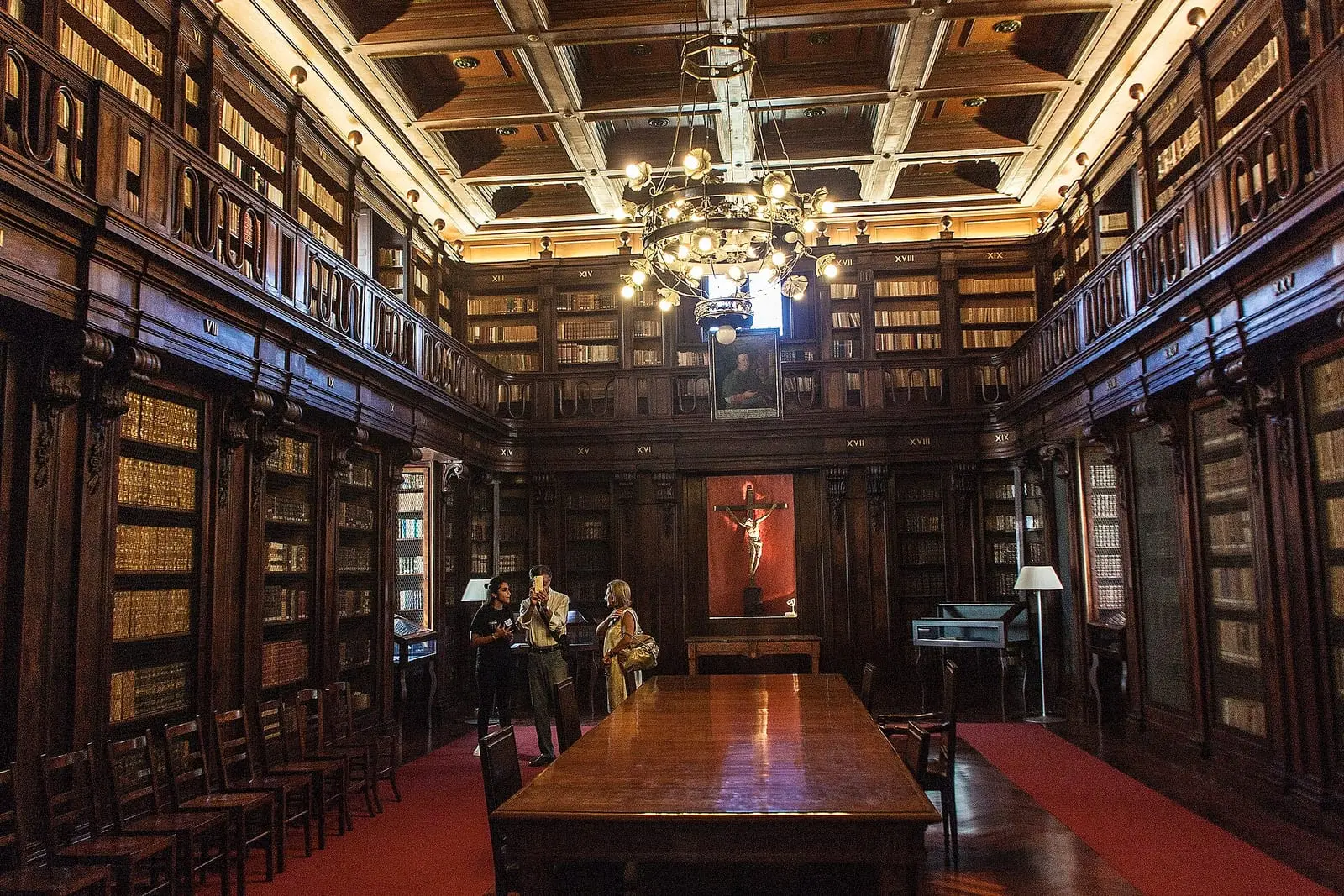
Historic palaces
A former bishop’s palace, rebuilt in the 17th century with monumental staircases and inner courtyards, today the seat of the Archbishop of Syracuse.
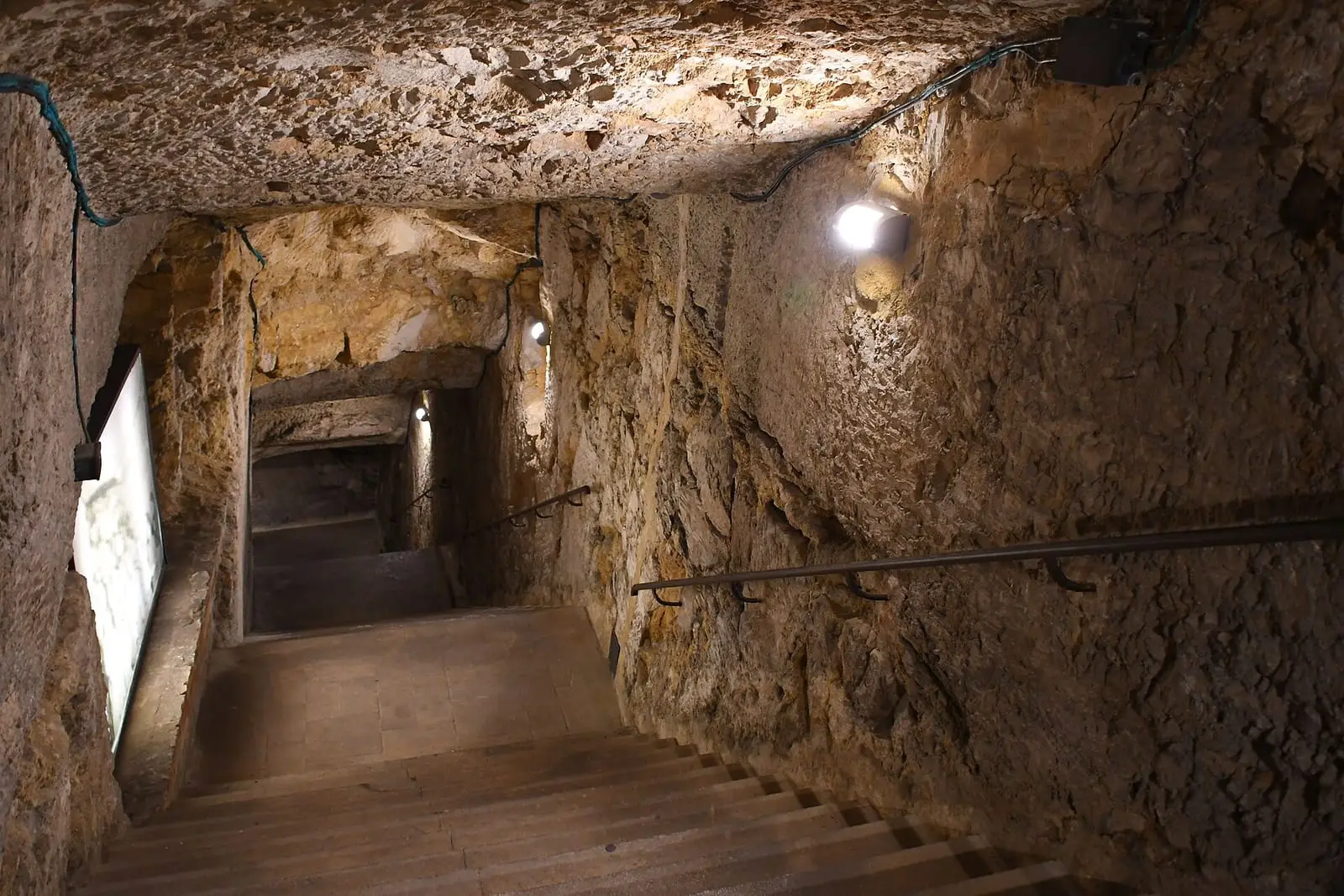
Archaeological sites
Underground galleries and Greek cisterns, part of the water system and later an air-raid shelter in the 20th century.
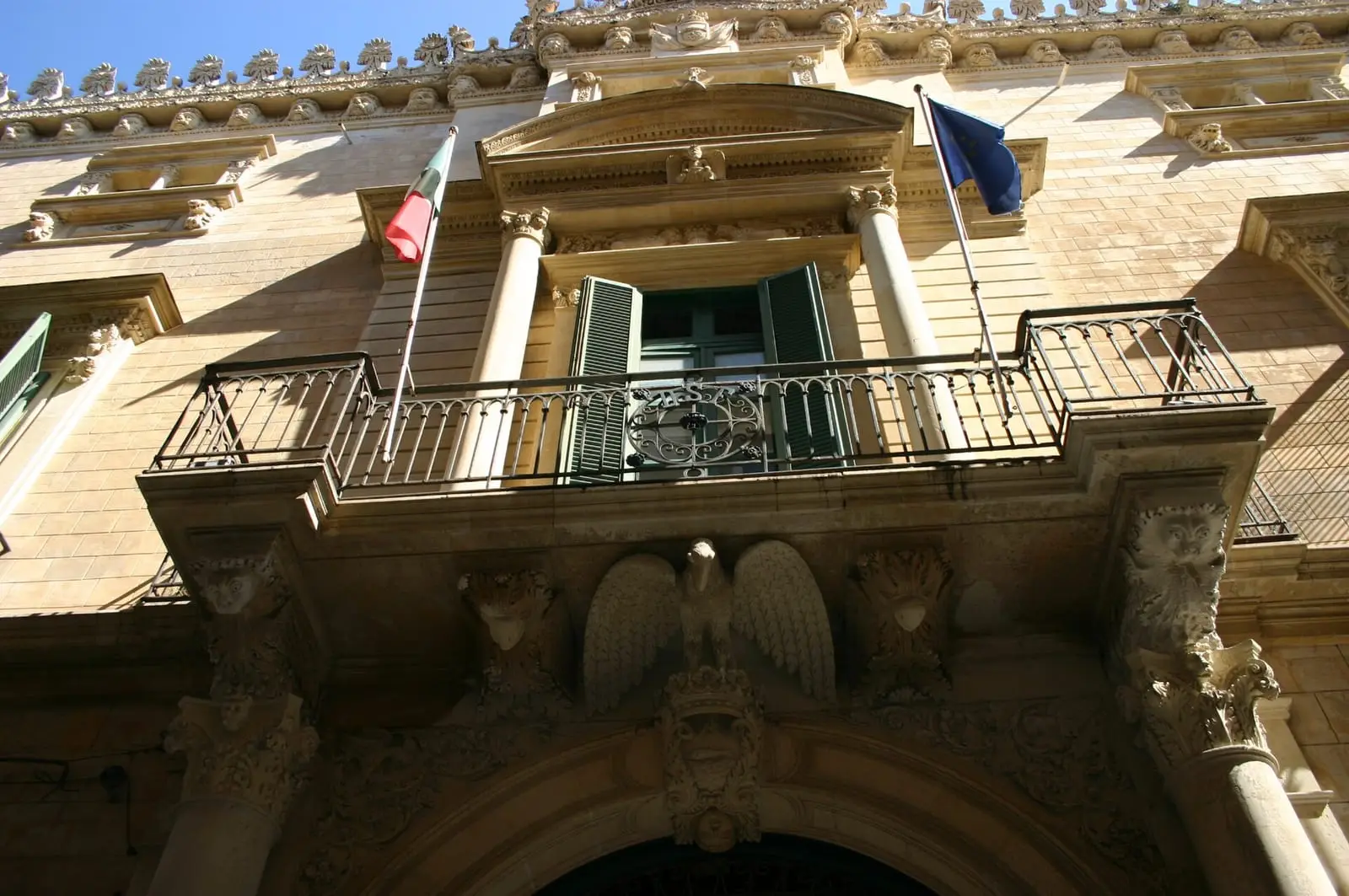
Historic palaces
An elegant neoclassical building (19th century) with a symmetrical façade and white stone decoration.
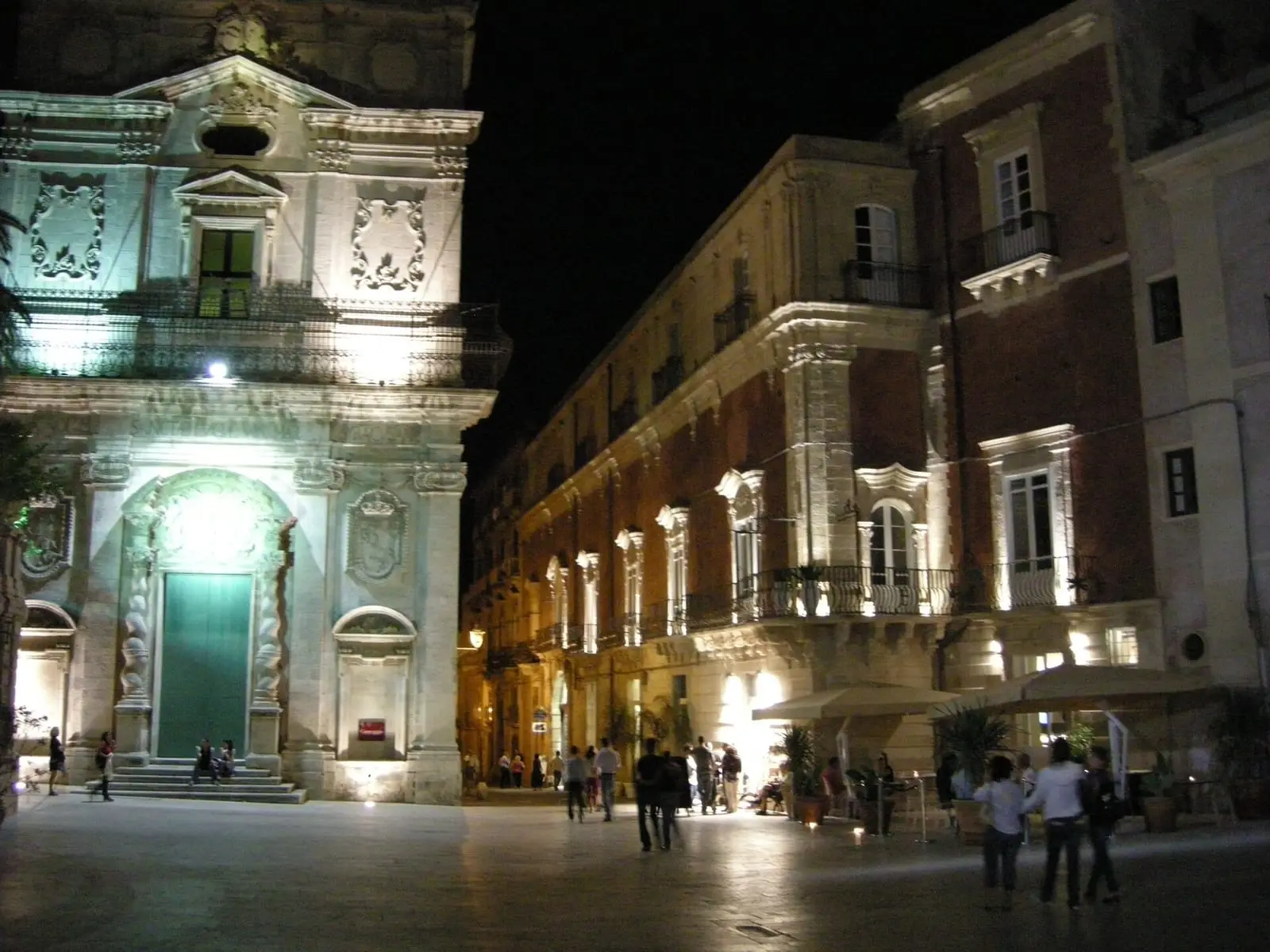
Historic palaces
An eighteenth-century noble residence with a panoramic loggia and hanging gardens, an example of baroque residential architecture.
Beaches
In the heart of Ortigia, this small urban beach offers a refreshing break with a view over the city’s ancient walls.
1.7 km 24′ on foot
Location on Google Maps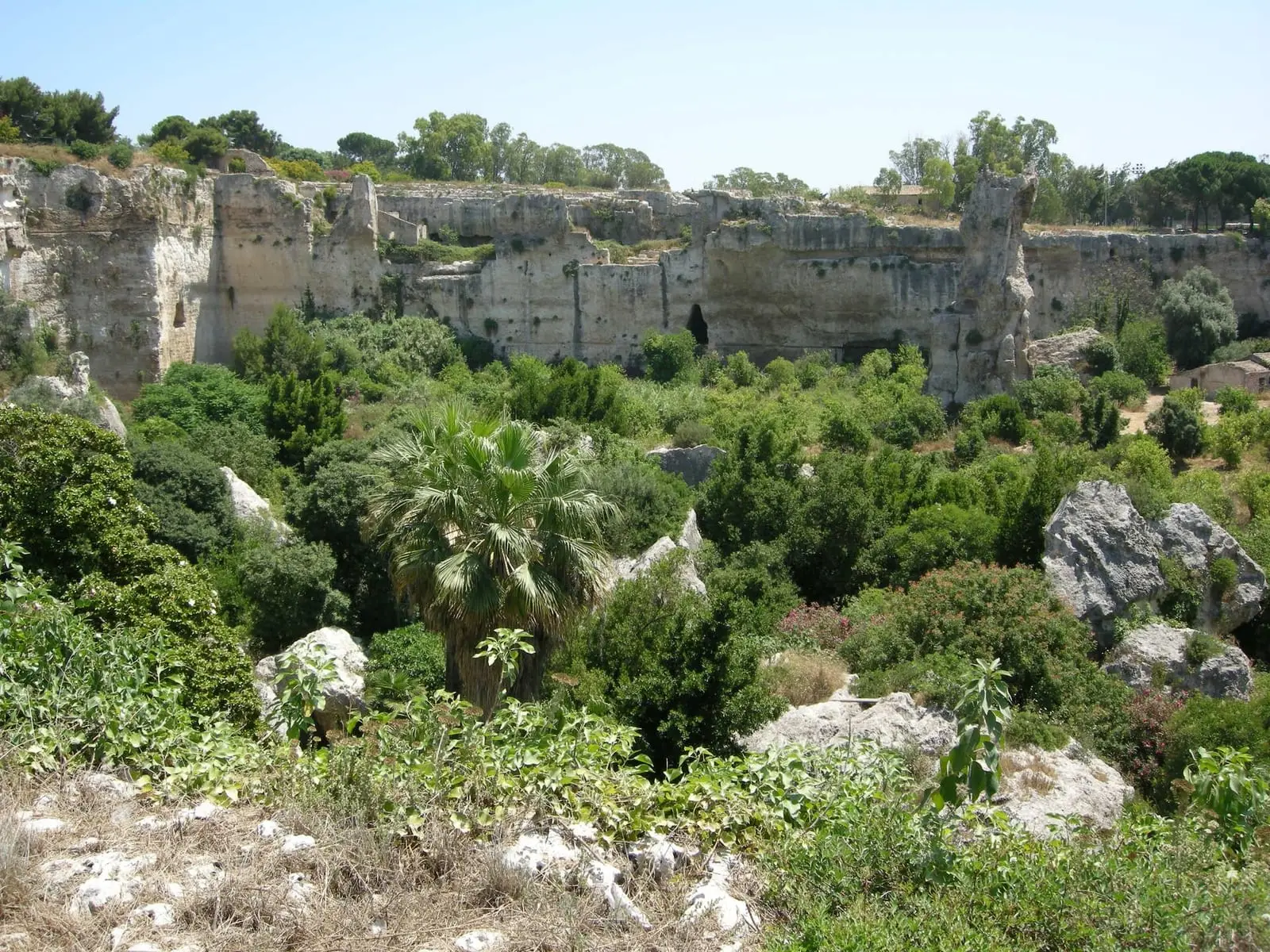
UNESCO · Ortigia and Neapolis
The ancient quarries of Syracuse, later natural prisons: deep inside them stands the famous Ear of Dionysius.
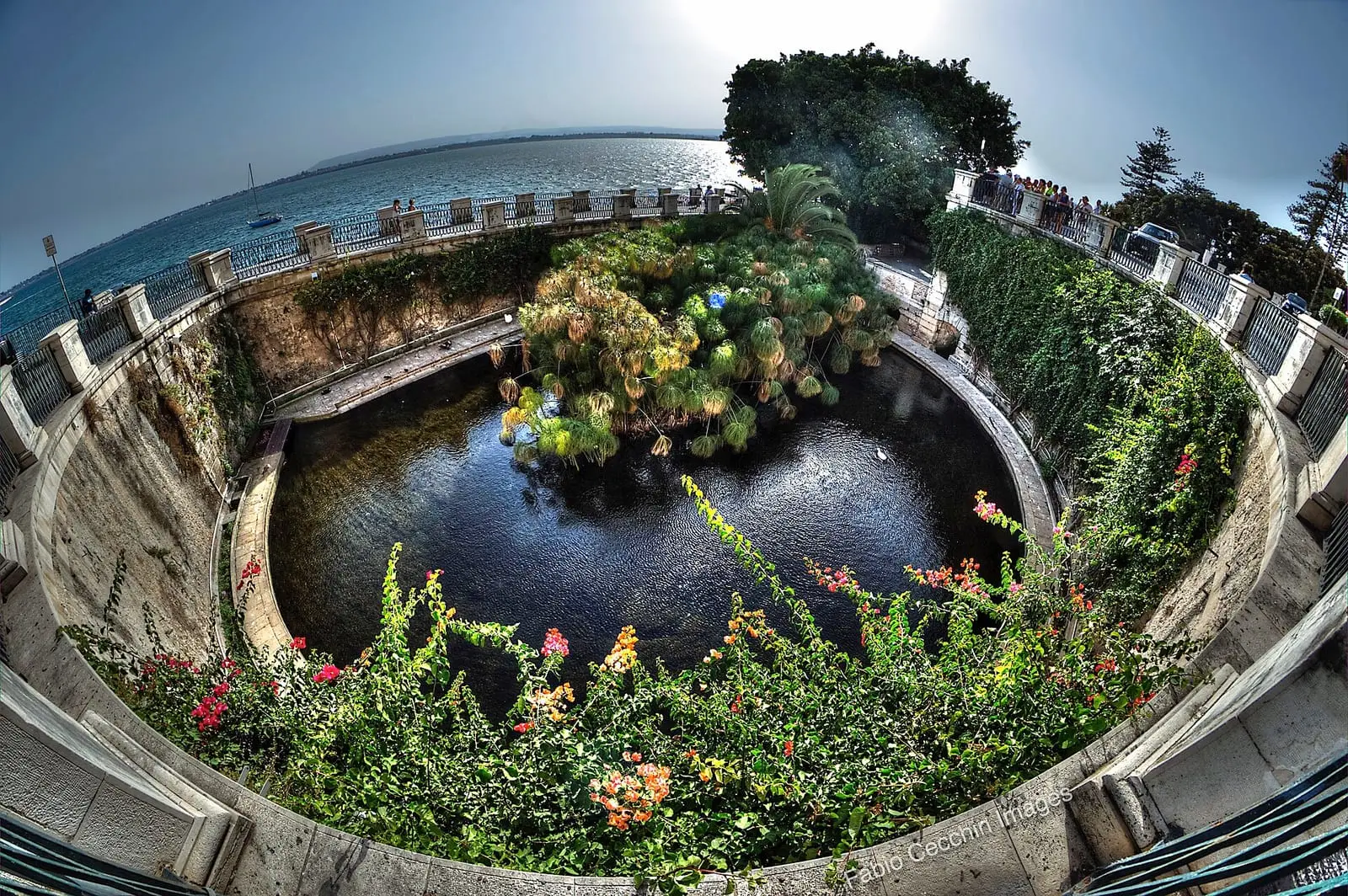
UNESCO · Ortigia and Neapolis
A freshwater oasis full of papyrus, a few steps from the sea. Bound to the myth of the nymph Arethusa and the god Alpheus.
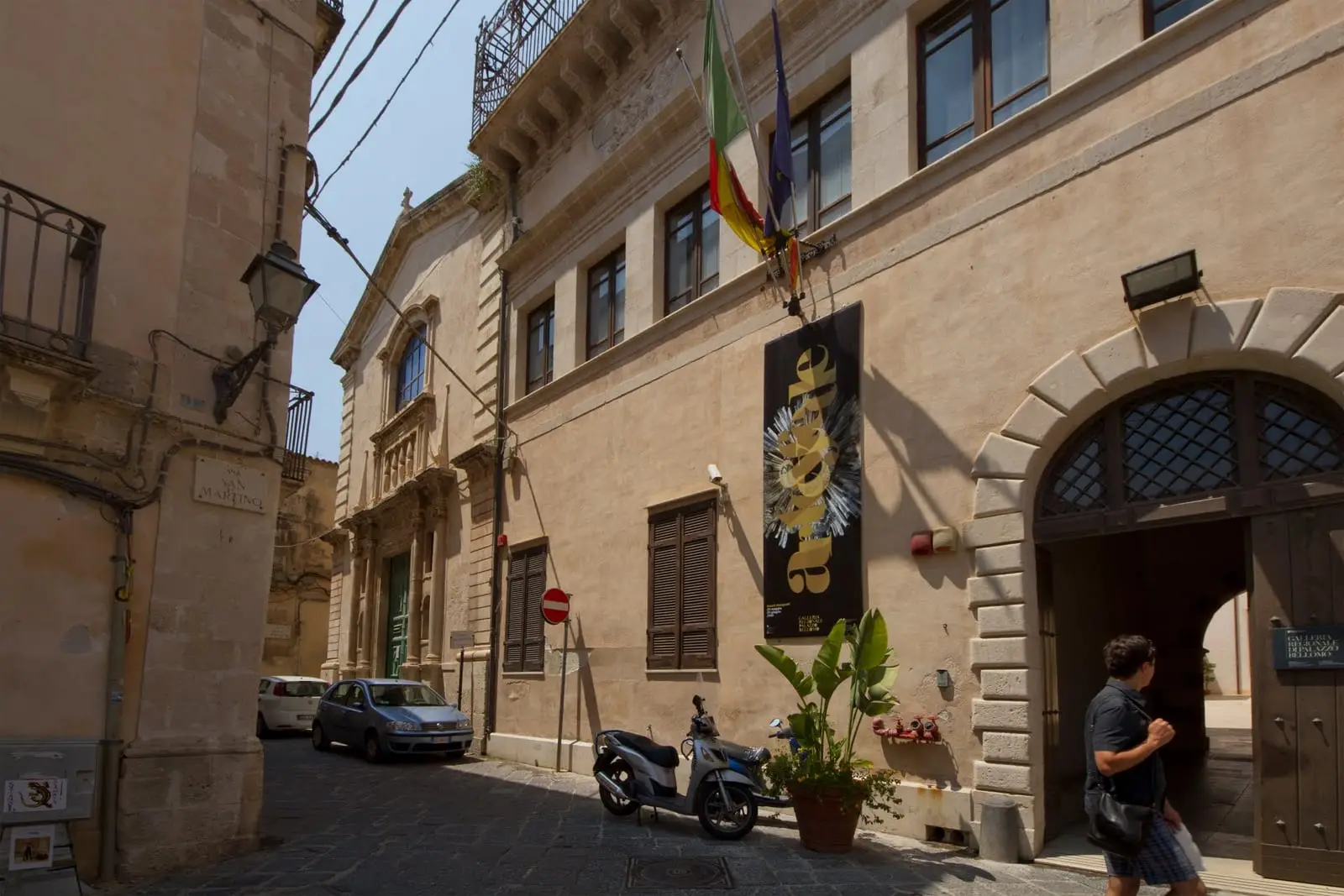
Museums
A Swabian-Catalan palace housing masterpieces by Antonello da Messina, Gothic and Renaissance painting, and medieval art collections.
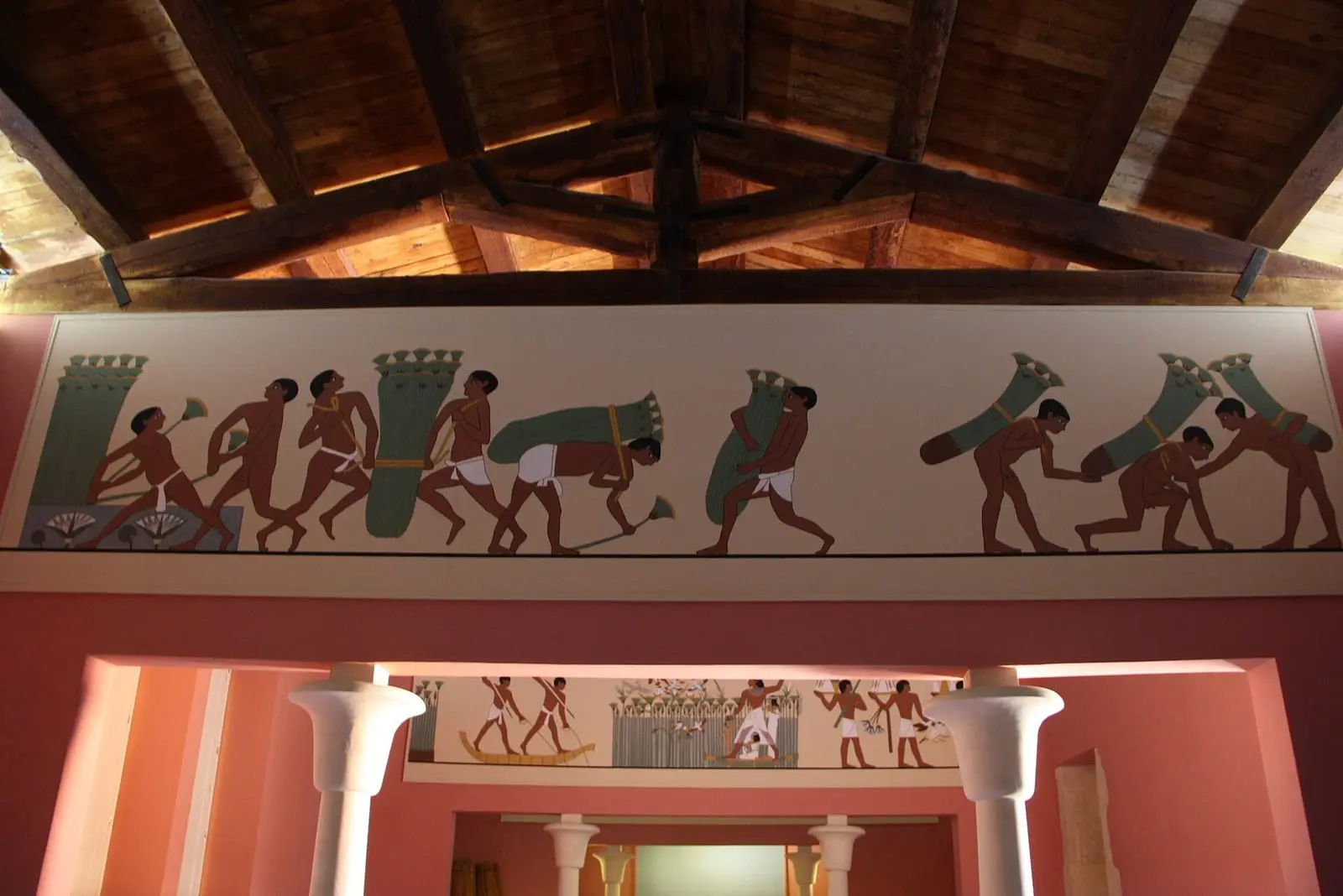
Museums
The only place in Europe where papyrus grows spontaneously: it retraces the history and the working of this precious plant with ancient and modern papyri.
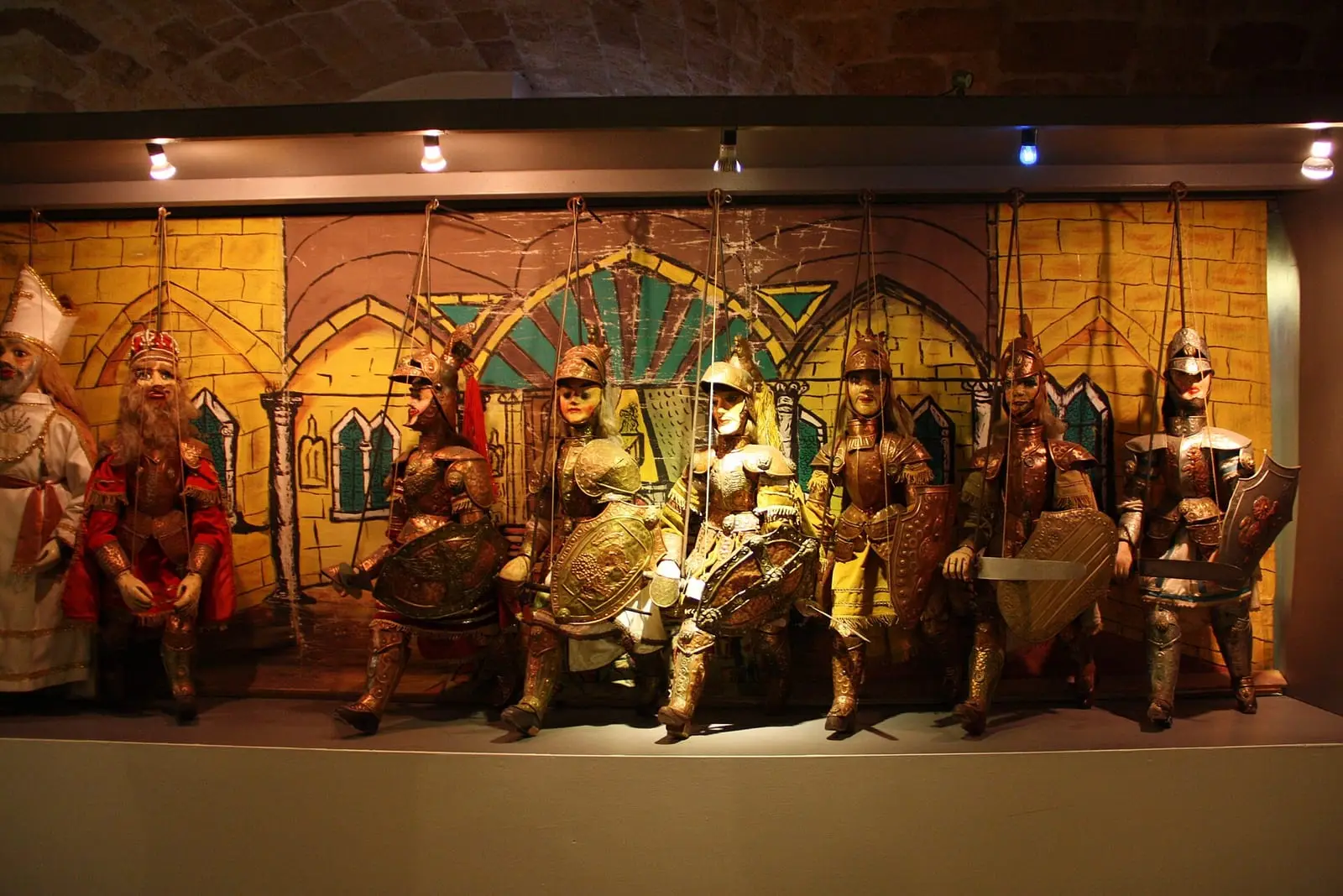
Museums
Dedicated to the Sicilian puppet theatre, with historic marionettes, battle scenes and the tools of the traditional show.
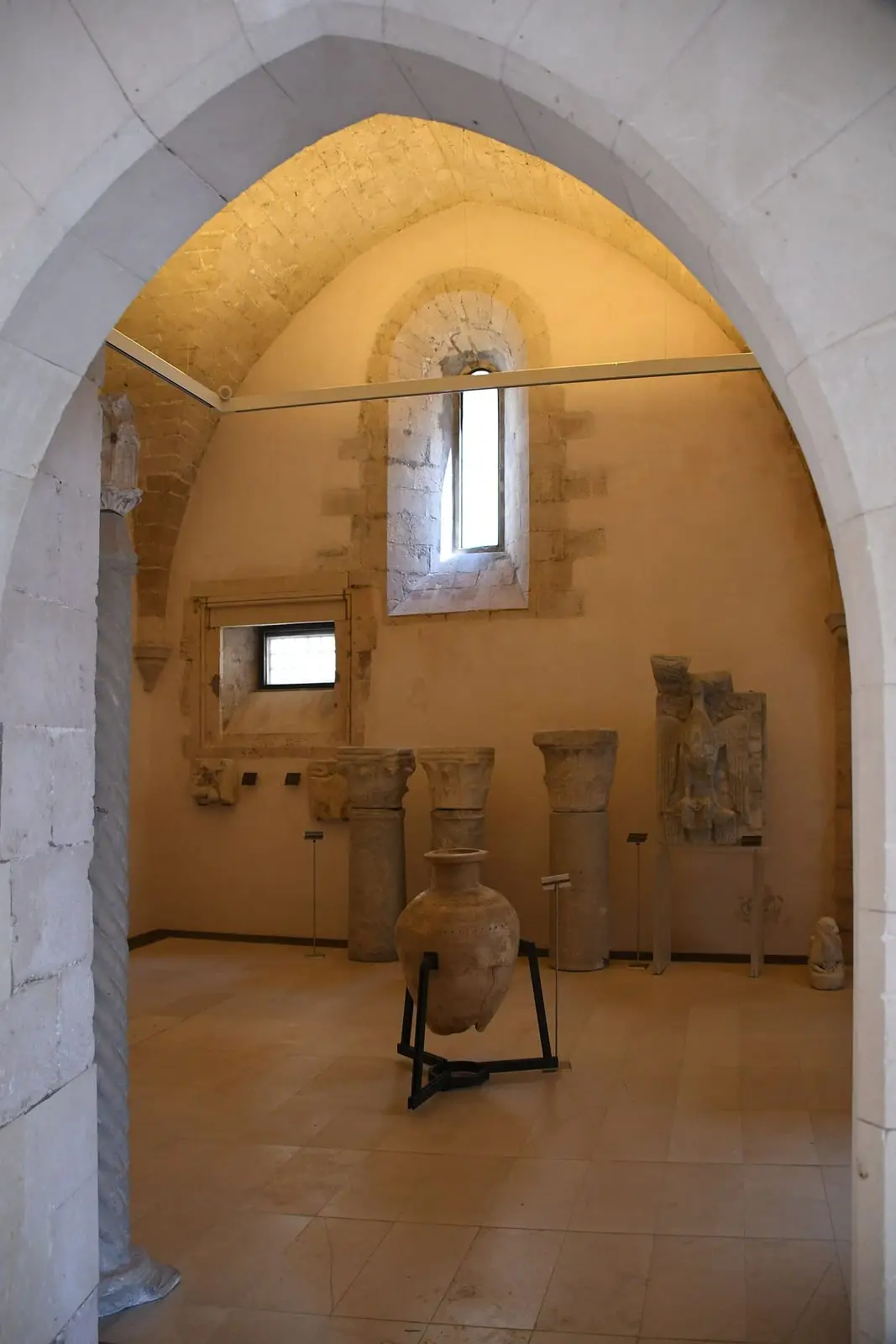
Historic palaces
A medieval palace of Swabian origin, today the seat of the Regional Gallery, which holds important Sicilian art from the 12th to the 18th century.
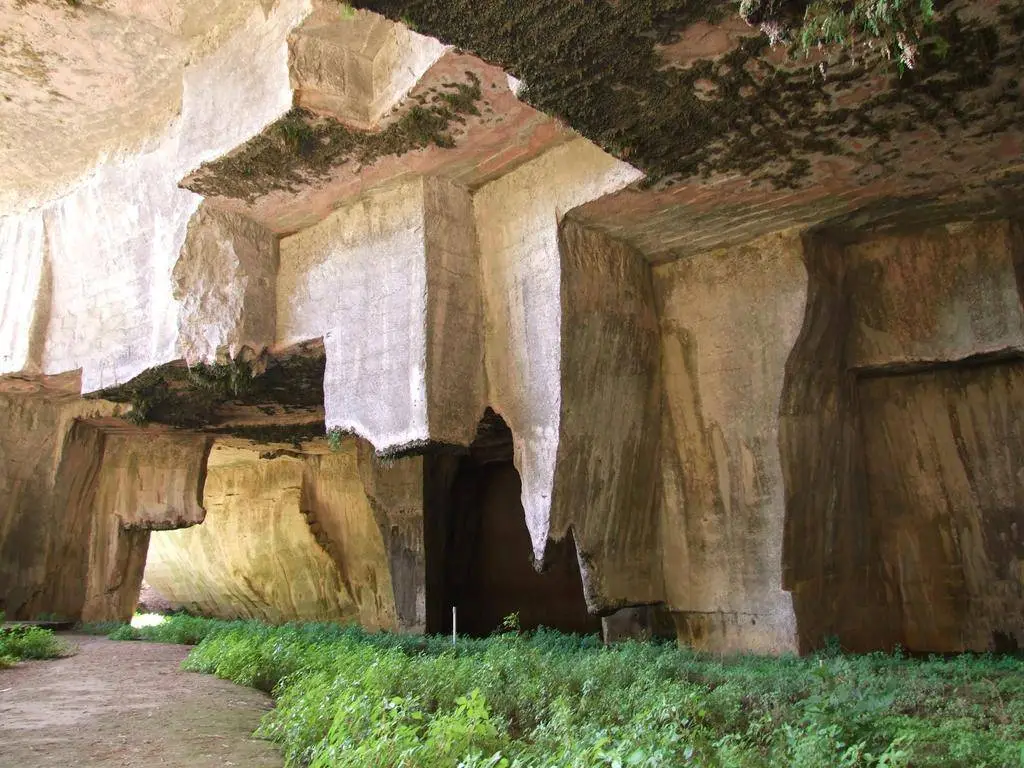
Archaeological sites
A former medieval quarry for rope-making, preserving vaults and niches: a trace of the ancient rope-makers’ craft.
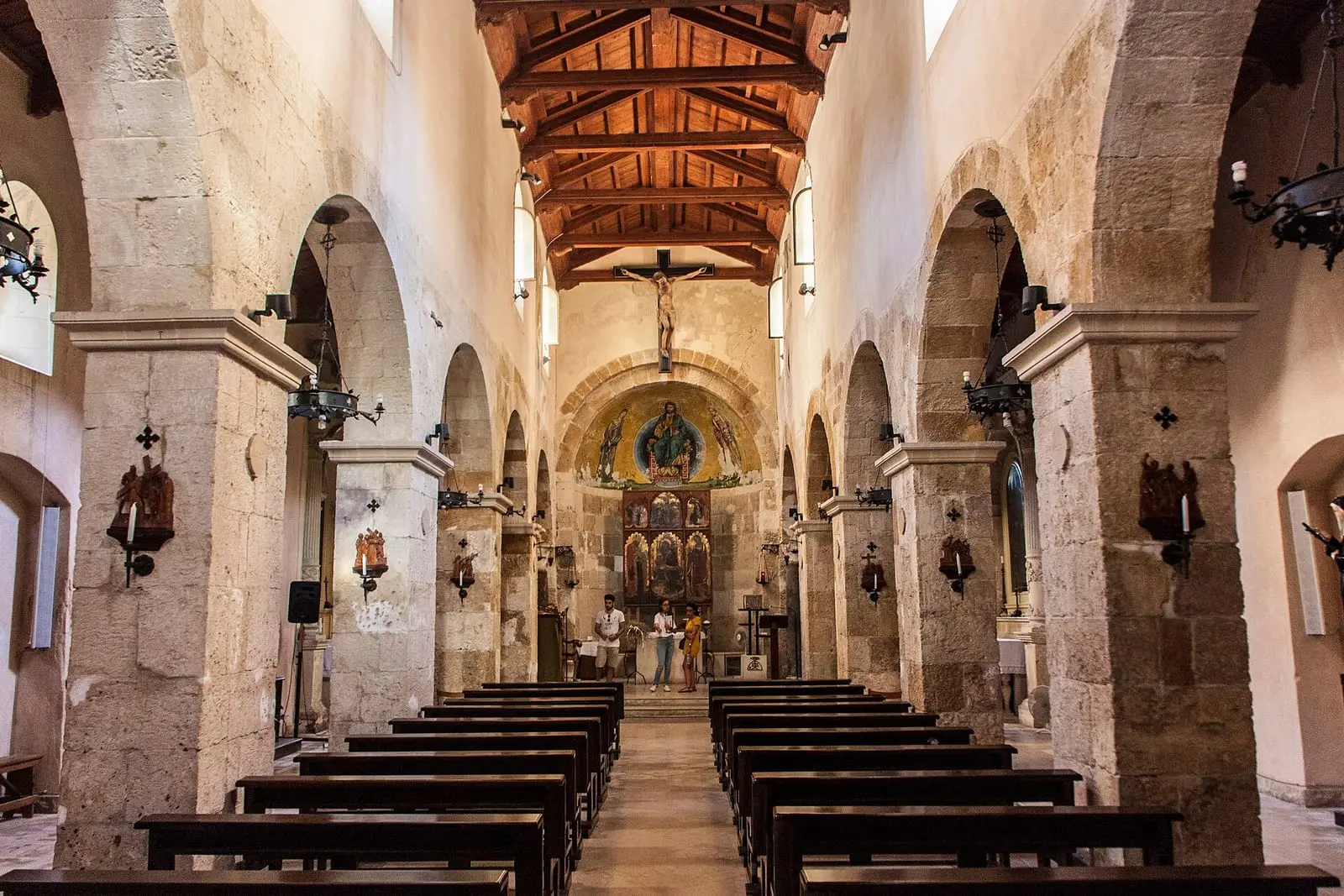
Churches
One of the oldest in Syracuse, with a Gothic portal and fourteenth-century frescoes.
Beaches
One of Ortigia’s most picturesque coves, with turquoise water and flat rocks, perfect for sunbathing and diving in.
1.9 km 27′ on foot
Location on Google Maps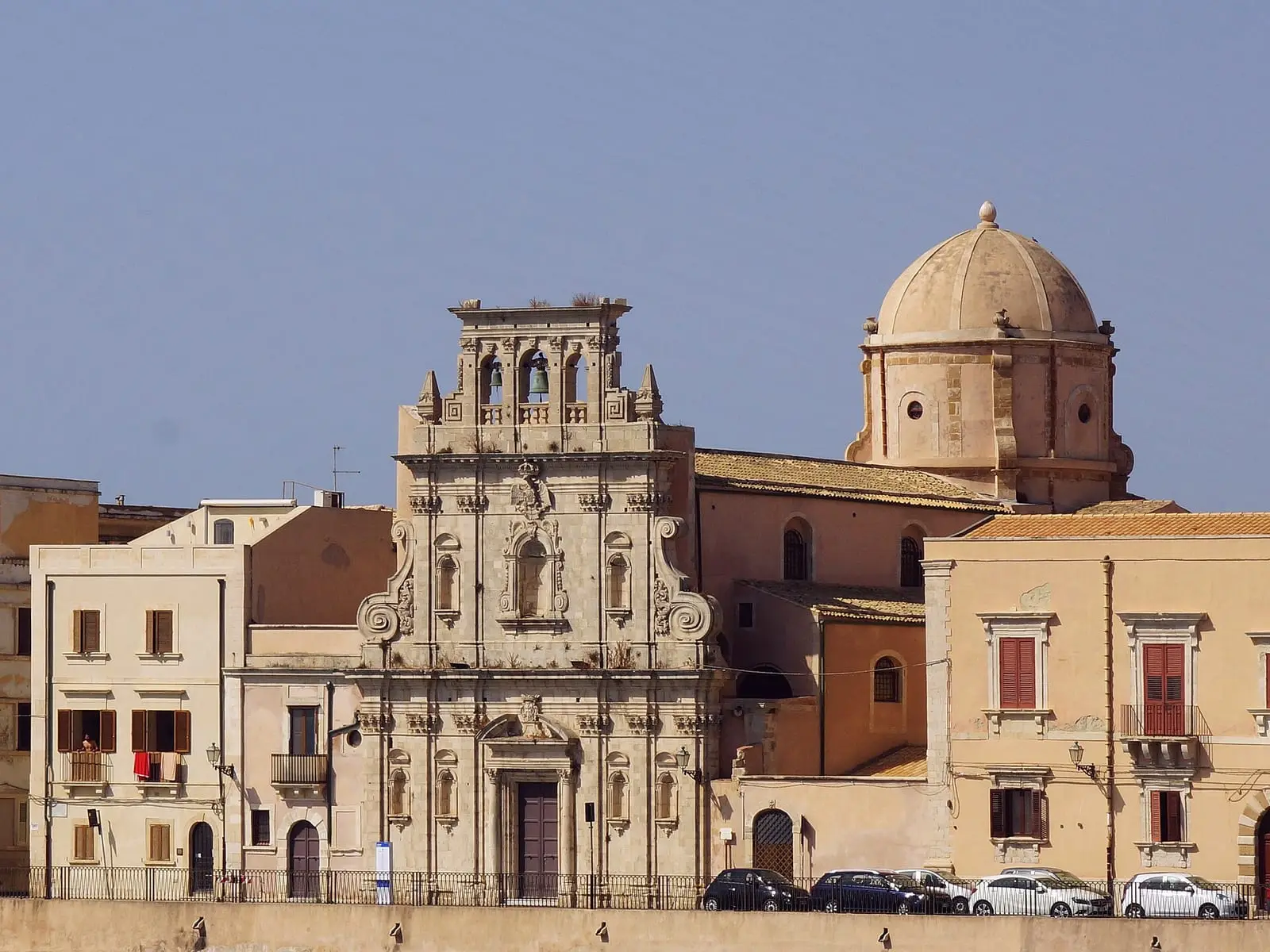
Churches
A Norman church with an Arab-Norman portal and characteristic apses.
Beaches
A panoramic spot with sea access near the Vigliena Fort, perfect for a quick swim or a sea-view break.
2.0 km 28′ on foot
Location on Google Maps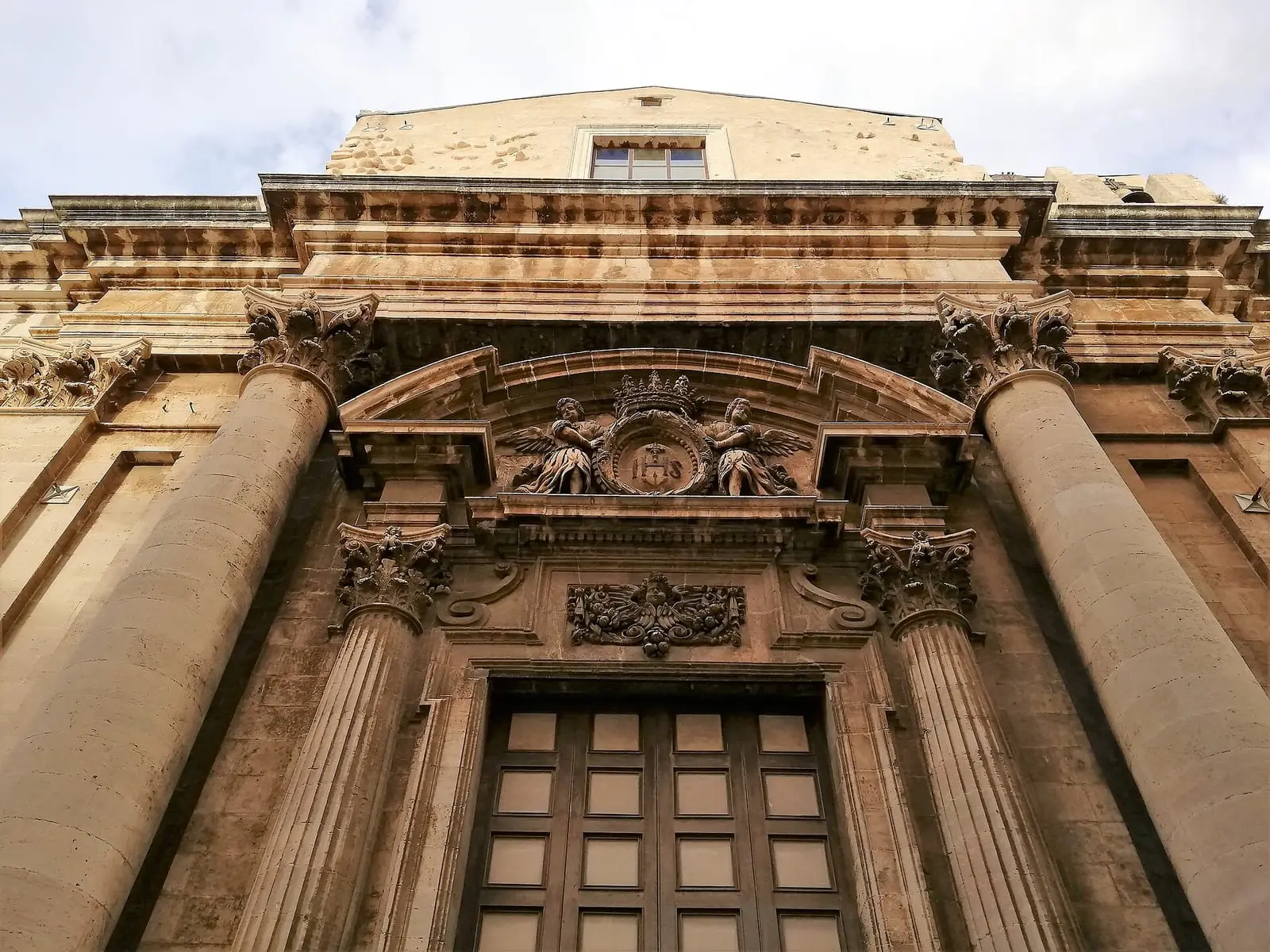
Churches
A monumental baroque building with a two-tiered façade and a sumptuous interior.
Archaeological sites
An important Greek burial area (8th-5th centuries BC) with pit graves that yielded rich grave goods and ceramics.
2.2 km 28′ on foot
Location on Google MapsParks and gardens
A playground in the Pizzuta district, a handy space for families and children living in the south of the city.
4.1 km 61′ on foot
Location on Google Maps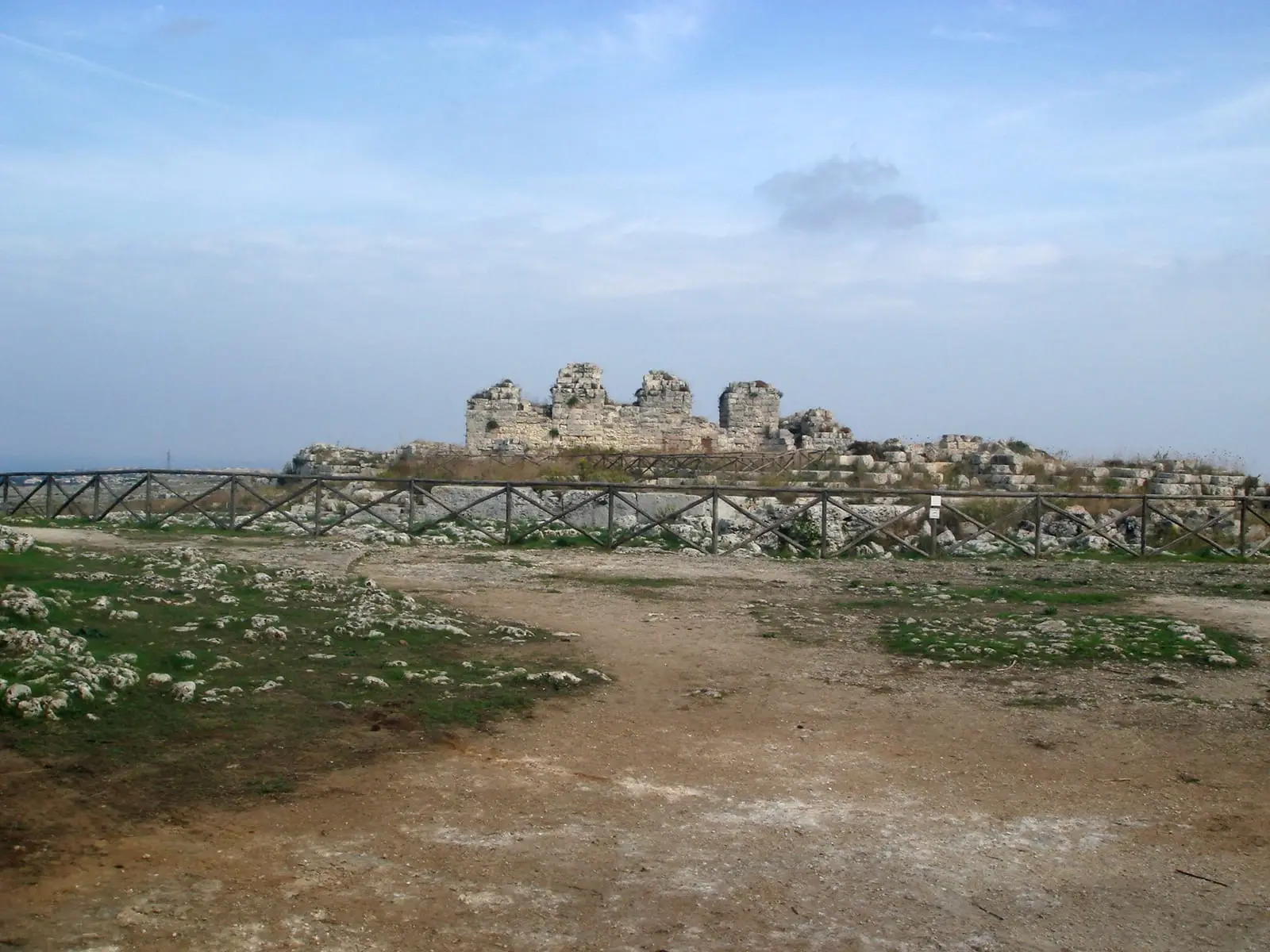
Archaeological sites
A 5th-century BC Greek fortress, a masterpiece of military engineering with underground galleries and an advanced defence system.
Archaeological sites
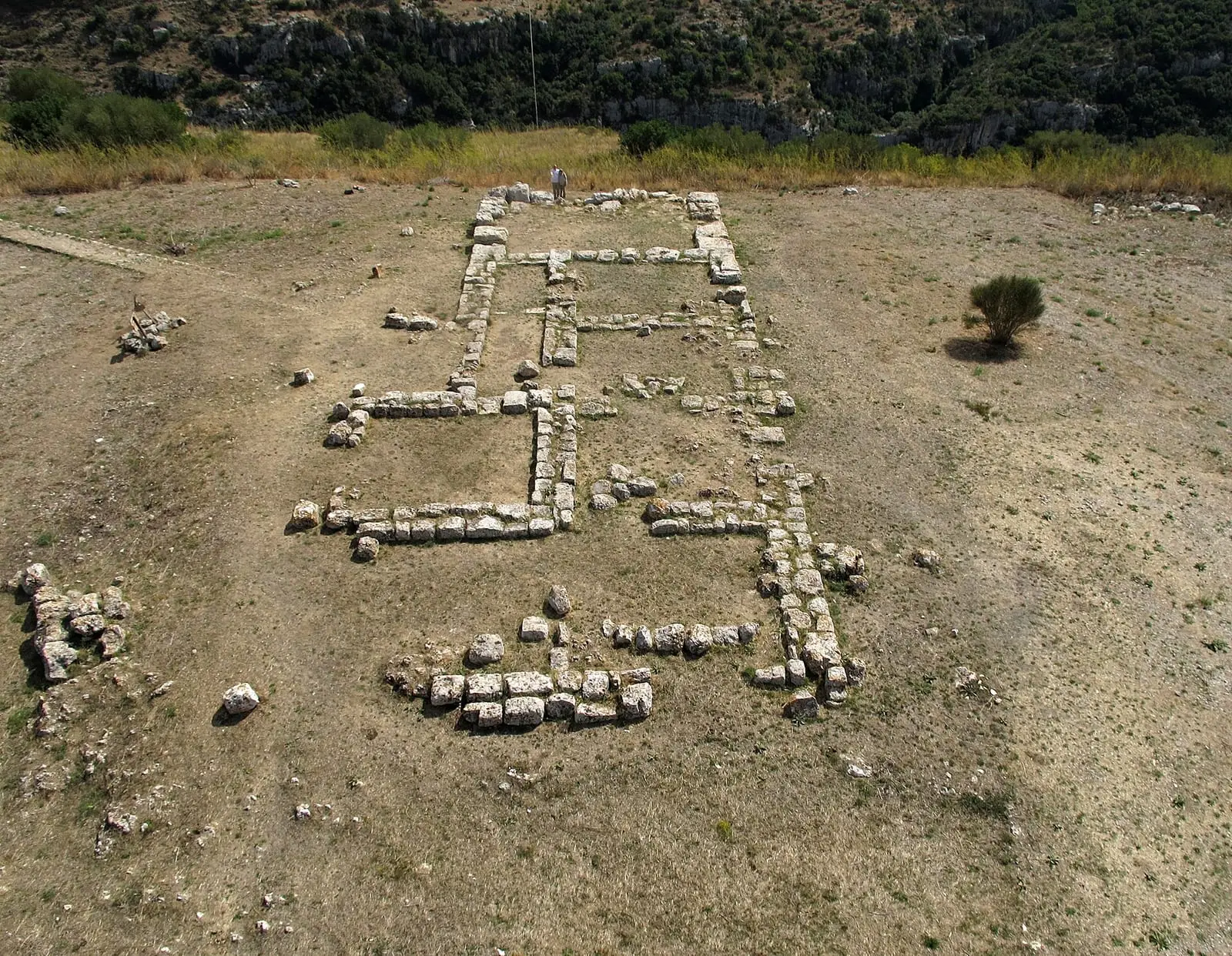
The ruins of Hiero II’s palace on the Temenite hill, with Doric halls and a courtyard, an example of Hellenistic architecture.
Archaeological sites
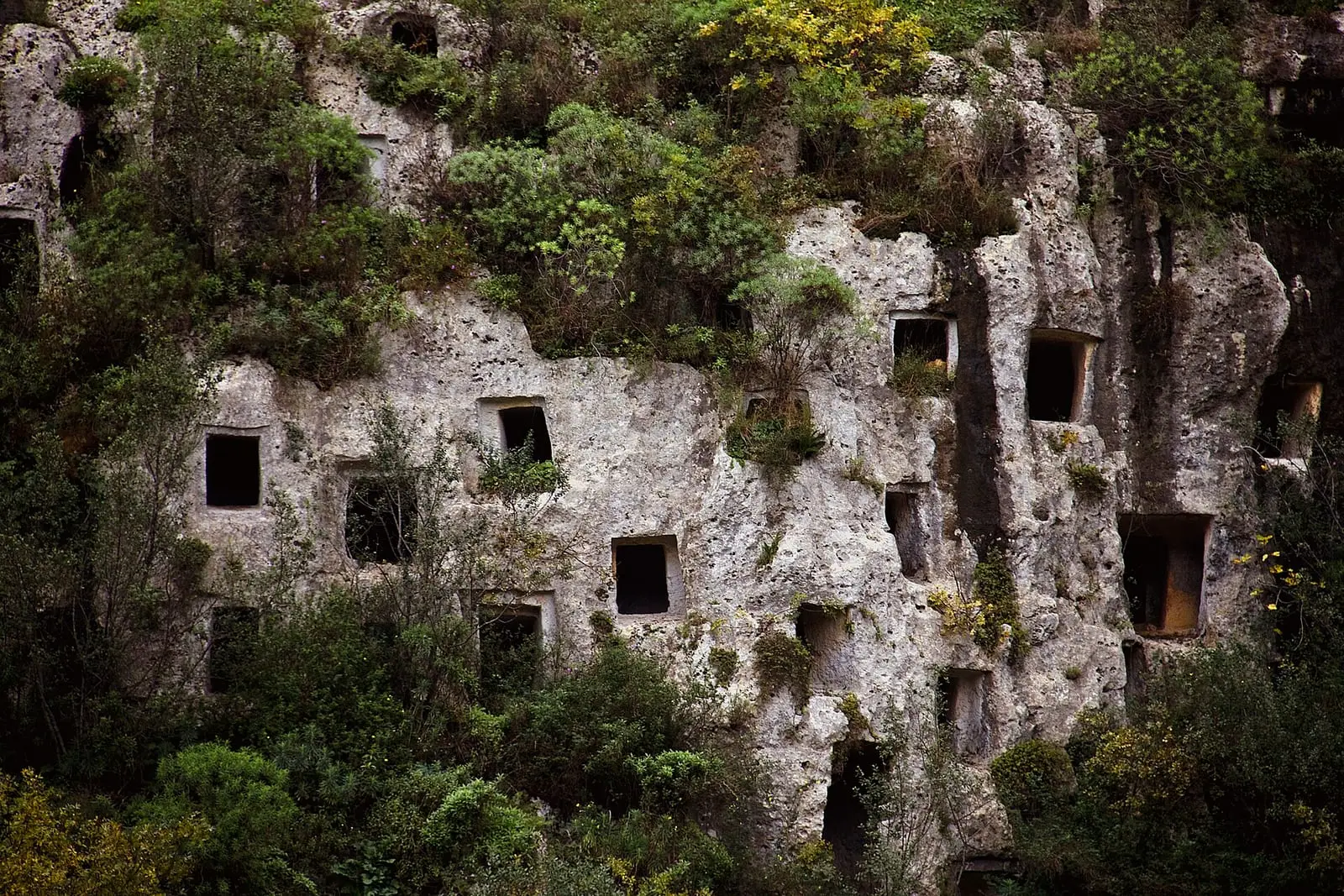
Over 5,000 rock-cut tombs dated between the 13th and 7th centuries BC, spread across the river gorges of the Anapo valley.
UNESCO · Pantalica and the necropolis
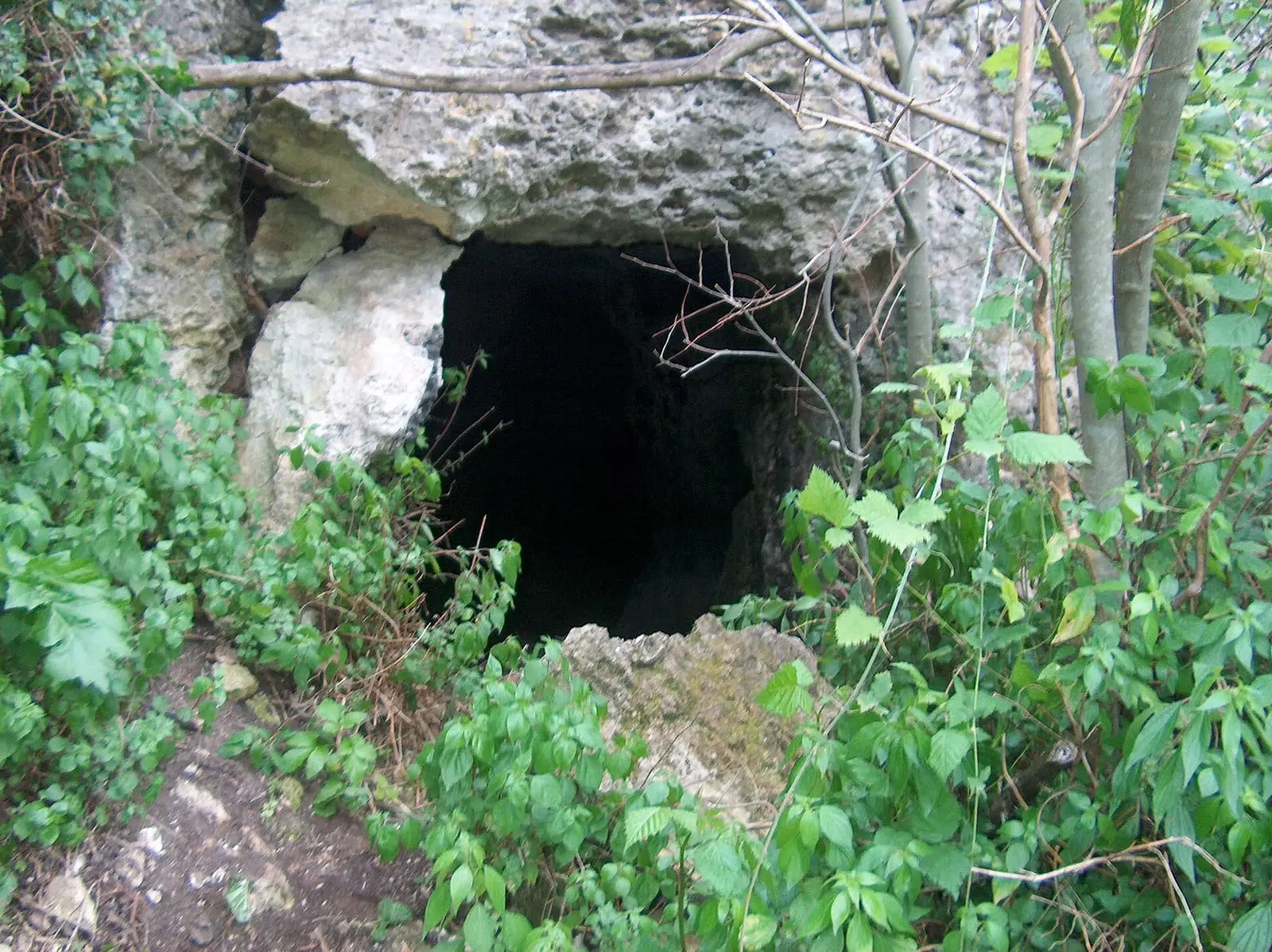
A typical prehistoric tomb with a cylindrical chamber, cut into the rock and covered with slabs, dating to the 2nd millennium BC.
Photo: Melos · CC BY-SA 3.0
UNESCO · Pantalica and the necropolis
A breathtaking overview of the necropolis: thousands of cavities cut into the rock walls, arranged in regular groups.
Archaeological sites
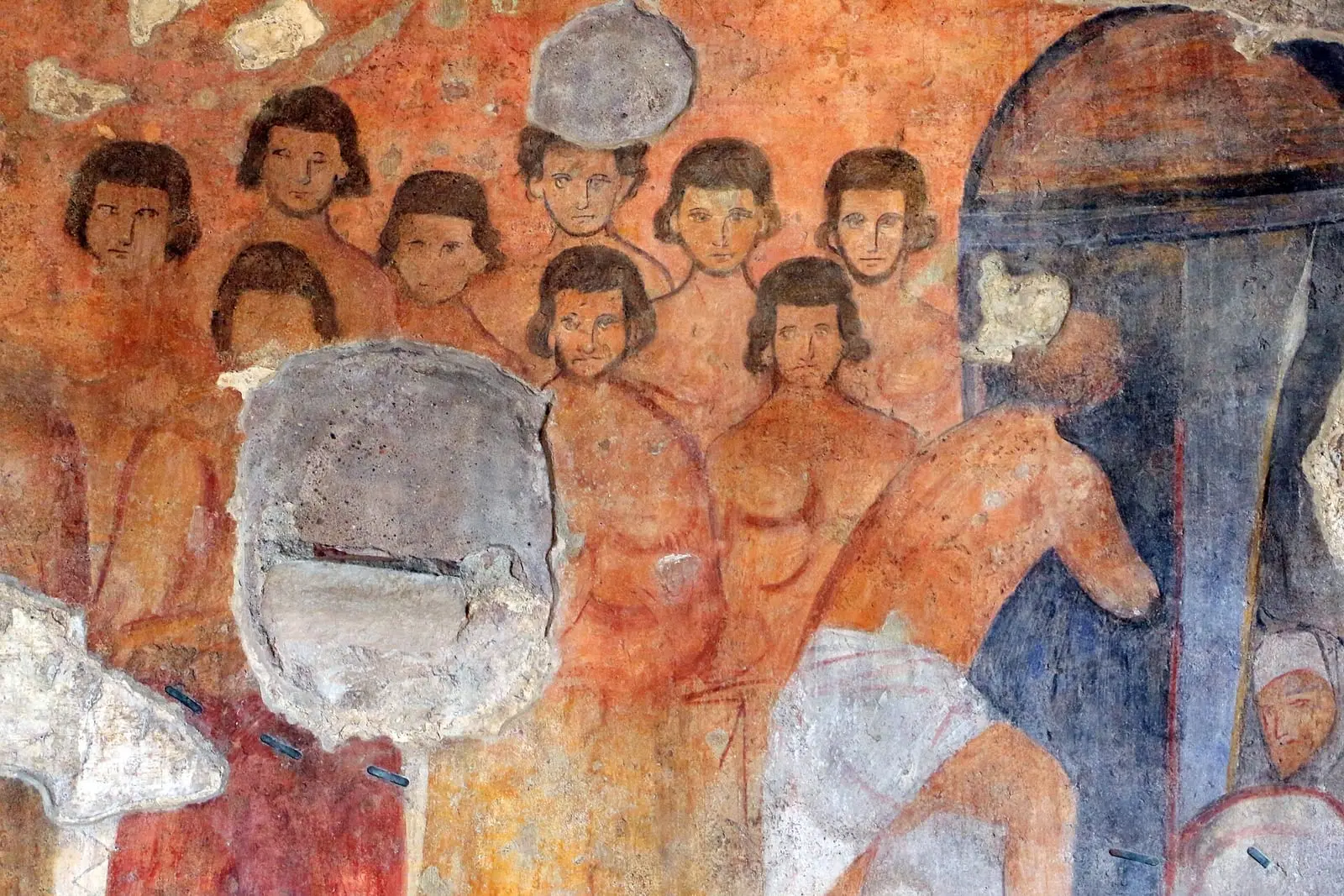
Small rock-cut chapels (such as the Oratory of the Forty Martyrs of Sebaste) with late antique Byzantine frescoes.
Archaeological sites
2nd millennium BC, a circular burial cut into the rock and covered with slabs: typical of the necropolis.
The 4 cards without a distance are at the bottom: for those places we only give the position on the map.
Published distances are indicative estimates from 37 Viale Luigi Cadorna, not verified walking routes. Actual routes and times may vary; check the map before setting off.